


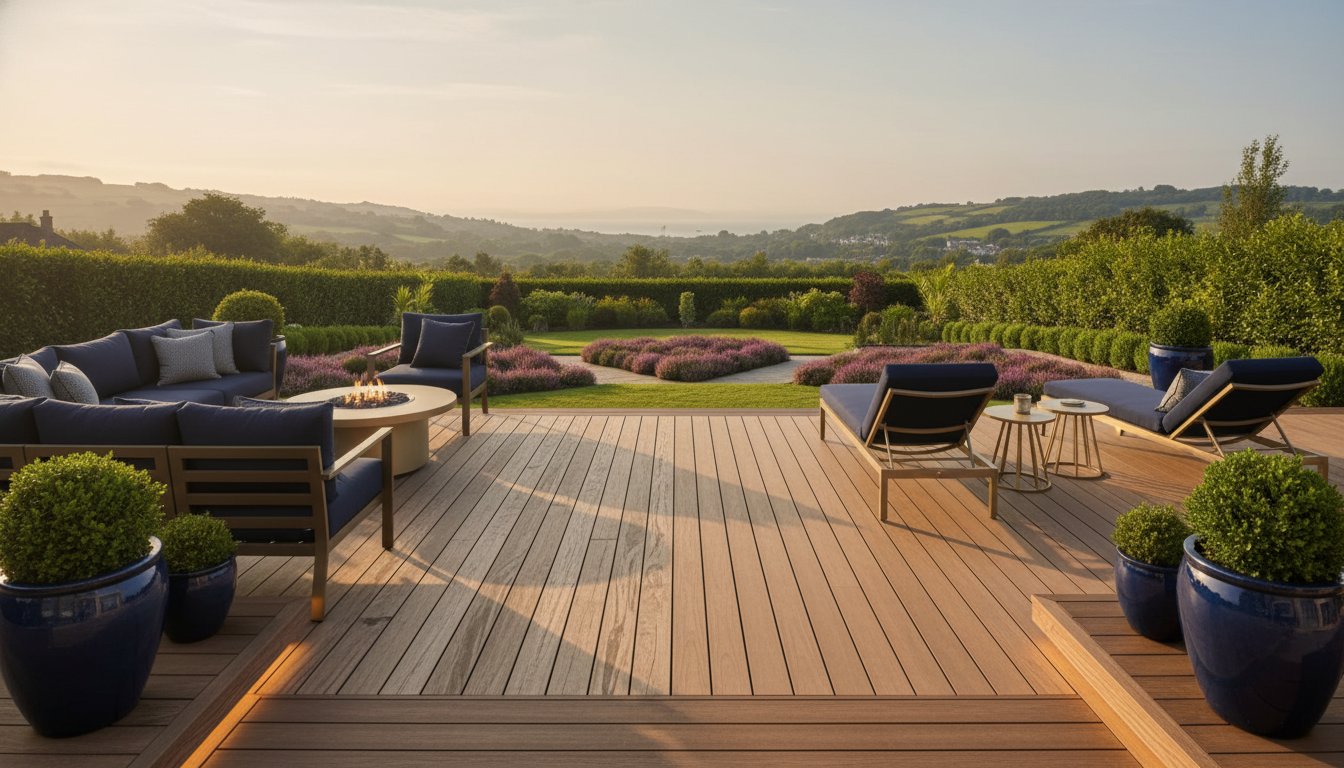
The traditional choice of natural wood might actually be the most expensive commitment you make for your Swansea garden. When weighing composite vs timber decking in 2026, the decision extends far beyond the initial aesthetic; it’s an investment in the long-term integrity of your home’s outdoor sanctuary. You likely appreciate the organic warmth of timber but fear the relentless Welsh rain that leads to rot, or perhaps you worry that modern alternatives will lack the soul of natural materials. It’s a common tension for those who value both craftsmanship and peace of mind.
Discover which material offers the ultimate blend of luxury, durability, and value for your upcoming renovation. This guide bridges the gap between visionary landscaping and practical longevity. We will analyze the shift toward warmer tones like “Biscayne” brown, break down 2026 material costs ranging from £20 to £200 per square meter, and clarify the latest Welsh planning regulations. By the end, you’ll have the clarity needed to create a safe, beautiful space for hosting that withstands the coastal elements with effortless grace.
Key Takeaways
- Understand how advanced material science protects your investment against Swansea’s coastal humidity, ensuring a surface that remains pristine without the burden of annual staining.
- Evaluate the long-term value of composite vs timber decking by comparing the lifecycle costs of engineered polymers against the timeless, artisanal appeal of elite hardwoods.
- Discover how to harmonize your outdoor living space with Swansea’s unique architecture through bespoke colour palettes and seamless integration with high-end landscaping features.
- Gain peace of mind through our commitment to total ownership, where every board is laid by an in-house team of craftsmen rather than third-party subcontractors.
- Explore the 2026 shift toward architectural outdoor environments that function as sophisticated extensions of the home, prioritizing both sustainability and visionary design.
Evaluating the Decking Landscape in Swansea and South Wales
The concept of the garden has undergone a profound metamorphosis in South Wales. What was once a simple patch of lawn or a basic stone patio has evolved into a sophisticated architectural extension of the home, designed to facilitate a seamless transition between indoor and outdoor living. In 2026, the local market is moving away from generic, temporary structures in favor of bespoke installations that prioritize both aesthetic grandeur and structural longevity. This shift is particularly evident as homeowners increasingly view their gardens as vital contributions to their property’s legacy, rather than mere functional add-ons.
Selecting the right foundation for this space requires a nuanced understanding of composite vs timber decking, especially when considering the unique environmental pressures of the region. A high-quality deck serves as the centerpiece of a comprehensive outdoor renovation in South Wales, acting as the structural anchor for outdoor kitchens, seating galleries, and fire pits. The modern Swansea homeowner now seeks materials that reflect a commitment to sustainability and high-performance engineering, ensuring that their investment remains a source of pride for decades.
The Swansea Climate Factor
The geography of the Gower Peninsula and the Mumbles provides a stunning backdrop, but it also presents a formidable challenge to traditional building materials. High humidity levels combined with salt-laden air from the Bristol Channel create an environment where standard softwood often fails prematurely, typically succumbing to wood-decay fungus within a decade. To combat these conditions, the selection process must prioritize moisture resistance and structural stability. Wood-plastic composite materials have gained significant traction here because they are engineered to be impervious to the biological threats that plague natural timber. In the context of South Wales landscaping, coastal durability refers to a material’s inherent capacity to maintain structural integrity and aesthetic finish when subjected to the corrosive combination of high saline concentration, persistent moisture, and fluctuating maritime winds.
Defining Your Project Goals
Every visionary project begins with a clear definition of purpose. Some homeowners are drawn to the natural authenticity and sensory warmth of elite hardwoods, while others prioritize the modern efficiency and minimal upkeep of premium composites. Your choice between composite vs timber decking should be guided by how the space will be utilized. A high-traffic entertainment hub requires a different level of slip resistance and surface hardness than a quiet, secluded family sanctuary. At Regal Group, our in-house team approaches the initial consultation phase with a focus on lifecycle value. We help you balance the initial capital outlay against the long-term costs of maintenance, ensuring that the final installation is not just a beautiful structure, but a sustainable asset that enhances your lifestyle and your property’s market position.
The Material Science: Understanding Composite and Timber Composition
The architectural integrity of a project relies heavily on the molecular harmony of its components. When evaluating composite vs timber decking, one must look beneath the surface to understand how these materials are birthed and refined. Composite is no longer the simple “plastic” alternative of a decade ago; it’s a sophisticated, engineered matrix of recycled wood fibres and high-density polymers. In 2026, manufacturing breakthroughs have introduced multi-tonal streaking and deep embossing techniques that replicate the tactile nuance of natural grain with such precision that it challenges the visual dominance of traditional wood. This evolution ensures that the modern garden retains a sense of organic warmth without the inherent vulnerabilities of raw timber.
Timber remains a prestigious choice for many, offering a spectrum of performance that ranges from accessible pressure-treated softwoods to elite, durable hardwoods. While timber appeals to the senses, it must adhere to strict UK timber regulations to ensure ethical sourcing and environmental integrity. FSC-certified options provide a renewable legacy for your home, though they require a commitment to stewardship that engineered materials do not. Our consultants at Regal Group can guide you through these material nuances during a bespoke site visit to ensure your choice aligns with your lifestyle goals.
Composite Decking: Capped vs. Uncapped
The architectural significance of “capped” technology cannot be overstated in the context of South Wales. Capped composite is a high-performance decking material featuring a core of wood-plastic fibres encased in a resilient, co-extruded polymer shell that provides a shield against moisture and UV degradation. This protective layer ensures that the boards maintain their colour vibrancy even under the persistent glare of the sun or the heavy rainfall typical of the Swansea coast. Uncapped variants have become increasingly rare in premium installations because they lack this vital barrier, leaving them susceptible to staining and deep-seated moisture ingress.
Timber Decking: Softwood vs. Hardwood
Choosing between softwood and hardwood is a decision between immediate cost-efficiency and visionary longevity. Softwoods, such as pressure-treated Scandinavian Pine, offer a classic aesthetic but demand meticulous annual maintenance to prevent the damp Welsh air from compromising their structure. Conversely, hardwoods like Cedar and Iroko are rich in natural tannins and oils that act as a built-in defense mechanism. These elite species represent a long-term investment in quality, aging into a graceful silver patina over decades if left untreated, or retaining their deep, earthy hues with minimal intervention.
The surface you step upon is only as reliable as the skeleton beneath it. Whether you choose the natural allure of timber or the modern resilience of composite, the subframe remains the most critical component of the installation. In 2026, we increasingly recommend Use Class 4 treated timber or even structural aluminium subframes to ensure the foundation of your deck matches the 25 year or 30 year lifespan of the surface boards themselves. This holistic approach to material science is what separates a temporary garden feature from a permanent architectural legacy.
Performance in the Welsh Climate: Durability and Maintenance
Swansea’s maritime environment serves as a rigorous testing ground for any architectural material. The choice between composite vs timber decking often hinges on your willingness to engage in the perpetual stewardship that natural wood demands. While timber provides an undeniable sensory connection to nature, the high humidity and salt-laden winds of the Bristol Channel can accelerate degradation if maintenance is deferred. Our experience across the Gower and Mumbles suggests that the local microclimate rewards those who prioritize structural integrity over short-term savings. At Regal Group, we view a deck not just as a platform, but as a masterpiece that must endure; our commitment to quality ensures that the structural subframe is as resilient as the surface, creating a legacy that remains pristine for decades.
Modern composite boards are engineered to resist the warping and splintering that often plague timber after a few seasons of Welsh rain. Over a 15-year period, timber decks without professional intervention frequently exhibit signs of structural fatigue or insect damage. Conversely, the high-density polymers in composite remain inert and unaffected by the biological threats common in damp coastal regions. Regarding thermal performance, 2026 manufacturing advancements have significantly improved heat dissipation. While dark boards still retain more warmth than light oak, the difference is now negligible for those seeking a comfortable surface for bare feet during the summer months.
The Maintenance Stewardship Gap
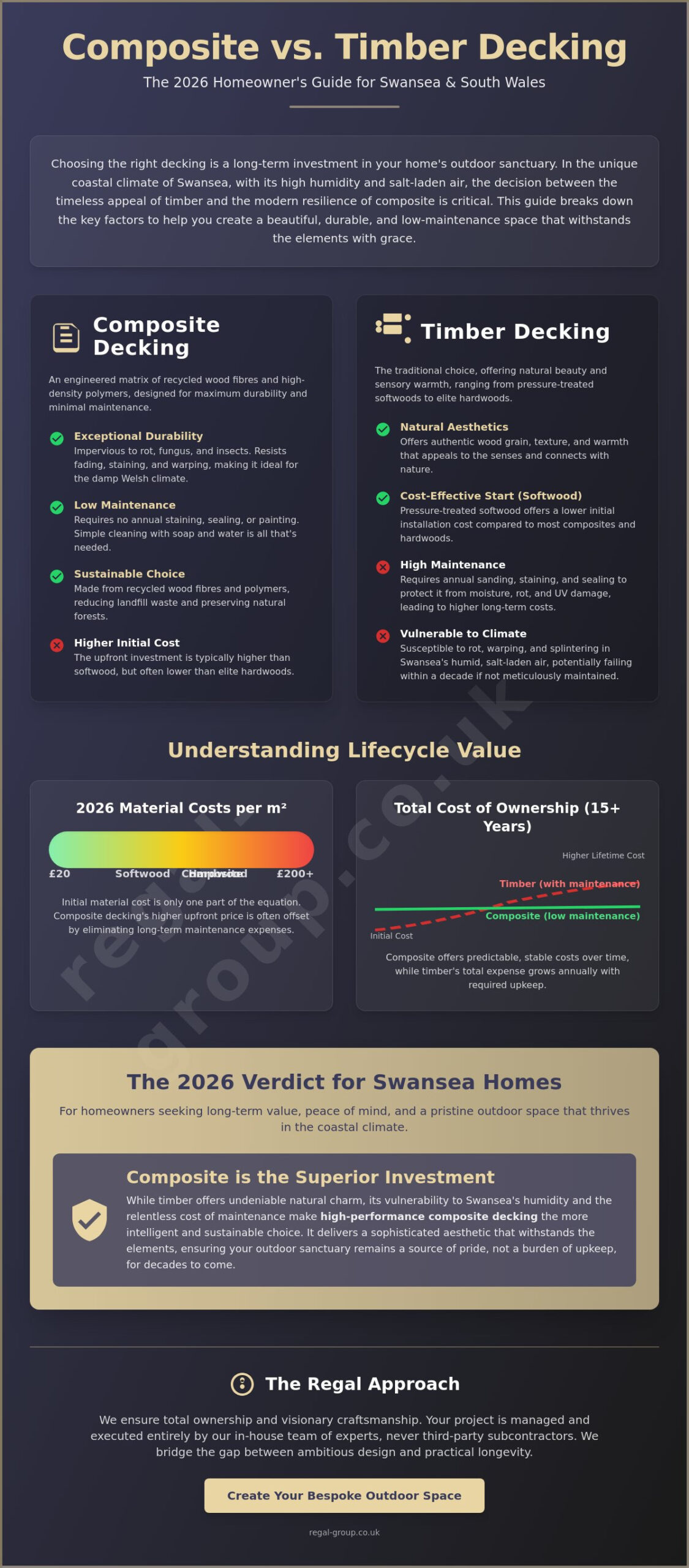
A timber deck in South Wales requires a disciplined 12-month schedule to survive the elements. This includes a deep mechanical clean every spring, a thorough inspection for fungal growth, and the application of premium UV-resistant oils. Without this intervention, softwood structures can lose their structural integrity in as little as five to seven years. Composite decking offers a liberated lifestyle, requiring only a simple solution of soap and water to maintain its prestige. This makes it the preferred choice for those who value their time as much as their aesthetic surroundings.
Safety and Texture Analysis
Safety remains a central pillar of our design philosophy. Composite is inherently splinter-free, providing a secure environment for families and pets. We utilize hidden fastening systems to create a seamless surface, removing the risk of protruding hardware or rusted screw heads. For the sloping gardens common in Swansea, selecting a board with high traction ratings is essential. This ensures a stable footing even during the frequent rainfall that defines our coastal identity.
| Feature | Timber (Softwood) | Composite (Premium) |
|---|---|---|
| Lifespan | 10 to 15 years | 25 to 30+ years |
| Maintenance | Meticulous annual care | Occasional cleaning |
| Resistance to Salt Air | Moderate (requires sealing) | Exceptional (inert) |
Aesthetic Vision: Integrating Decking into Your Swansea Garden Design
True sophistication lies in the synergy between materials across your entire property. A visionary garden design often pairs the organic warmth of a deck with the sleek, permeable elegance of resin driveways in Swansea. This combination of textures creates a multi-dimensional sensory experience, where the transition from the driveway to the garden feels deliberate and seamless. Furthermore, a well-engineered deck acts as the structural foundation for broader architectural ambitions, providing the necessary anchor for bespoke pergolas and garden pergola ideas, artisan fencing, or outdoor kitchen modules that define the garden’s functional zones.
Colour and Texture Trends for 2026
Current design movements in South Wales are embracing a palette that reflects the rugged beauty of the Gower. We’re seeing a significant rise in “Silver Birch” and “Anthracite” tones, which offer a sophisticated backdrop for both minimalist and traditional plantings. For those seeking a layered aesthetic, natural timber can be utilized to soften the clean, precise lines of a contemporary porcelain patio. This mixing of materials is a hallmark of elite landscaping, where the quality of the project is ultimately defined by the meticulous detail in the bespoke trim and the precision of the mitred corners. For homeowners looking to extend their outdoor vision beyond the deck itself, exploring the full range of patios in Swansea can reveal how complementary surfaces work together to create a cohesive and prestigious garden environment.
Lighting and Ambience
Designing for the human experience means considering how a space performs after the sun sets over the Bristol Channel. Integrating recessed LED lighting into the deck’s perimeter or stair risers adds a layer of evening sophistication that extends the utility of the garden. The choice of material significantly influences this atmosphere; timber’s natural grain tends to absorb light for a softer, rustic glow, while the refined finish of premium composite provides a sharper, more architectural reflection. These lighting zones allow you to create distinct areas for high-energy dining and quiet, meditative relaxation. To begin crafting your own architectural sanctuary, book a design consultation with the Regal Group team today.
The Regal Approach: Bespoke Decking Installation in Swansea
The final realization of an outdoor sanctuary requires more than just premium materials; it demands a philosophy of total ownership and accountability. Whether your choice has settled on composite vs timber decking, the execution must be flawless to ensure the longevity of your property’s legacy. Regal Group maintains a strict policy of using only our dedicated in-house team for every installation. We never delegate your vision to subcontractors. This singular point of responsibility ensures that the architectural precision established during the planning phase is carried through to the final board, resulting in a finish that reflects our unwavering commitment to quality.
Our commitment to end-to-end involvement means we oversee every detail, from the initial excavation and groundworks to the bespoke finishing touches. We don’t merely install a surface; we shape a permanent extension of your home that is built to transcend fleeting seasonal trends. By controlling every variable of the construction process, we guarantee that your deck remains a testament to superior craftsmanship and visionary design for decades to come. We take immense pride in our dedicated in-house Swansea team, whose craftsmanship serves as the heartbeat of every project we undertake.
The Importance of Professional Groundworks
The integrity of a deck is often decided before the first board is even laid. In the wet, often clay-heavy soils found across South Wales, a standard foundation is insufficient to prevent shifting or subsidence. We prioritize advanced drainage solutions and strategic ventilation to prevent the subframe rot that often plagues lesser builds in our coastal climate. Our team ensures total structural stability for multi-level or elevated designs, strictly adhering to the 2026 Welsh building regulations which treat decks within 5 meters of a home as formal extensions to ensure your property remains fully compliant and safe.
Your Consultation and Quote
A Regal Group site visit is a collaborative dialogue focused on your lifestyle goals and property value. We provide transparent pricing based on the latest May 2026 market data, which indicates that total supply and installation for composite decking typically ranges from £80 to £120 per square meter, while premium hardwood installations often sit between £110 and £130 per square meter. These figures represent more than a simple cost; they are an investment in a maintenance-free future or a timeless natural sanctuary. To begin your journey toward an elite outdoor space, we invite you to secure your place in our 2026 installation calendar. Contact our design team today to schedule your bespoke consultation and discover the potential of your garden landscape.
Crafting a Lasting Legacy for Your Outdoor Sanctuary
Regal Group brings over a decade of visionary outdoor craftsmanship to every project, ensuring that your vision is realized with absolute integrity. Our in-house expert team manages every detail of the construction process, specializing in the specific challenges of Swansea’s coastal landscaping to prevent common issues like subframe rot and UV fading. We invite you to enquire about your bespoke decking project in Swansea with Regal Group and begin the transformation of your garden into a sanctuary of elegance and durability. Your future outdoor space is ready to be shaped with precision and care.
Frequently Asked Questions
Is composite decking more expensive than timber in Swansea?
The initial capital outlay for composite is higher, but the lifecycle value often surpasses timber within 10 years of installation. As of May 2026, composite materials range from £45 to £200 per square meter, while timber starts at approximately £20. When you factor in the recurring costs of professional cleaning, staining, and the shorter 15-year lifespan of wood, composite emerges as the more sustainable financial choice for your property’s long-term legacy.
Does composite decking fade in the sun over time?
Premium capped composite is engineered to resist UV degradation and maintain its color vibrancy for 25 to 30 years. While older materials might have suffered from minor pigment loss, the “Biscayne” and “Silver Birch” tones popular in 2026 are specifically designed to withstand the Welsh sun. These high-quality polymers ensure that the deep, architectural finish remains consistent from the day of installation, protecting your garden’s aesthetic integrity.
Which decking material is the least slippery when it rains in South Wales?
High-quality composite boards with deeply embossed wood-grain textures offer superior traction during Swansea’s frequent rainfall. While natural timber can become a significant slip hazard if algae and moisture are allowed to accumulate, the inert nature of composite prevents the biological growth that creates slippery surfaces. For the sloping gardens common in the Gower, we recommend selecting boards with a high slip-resistance rating to ensure a safe, stable surface for year-round use.
Can I install a pergola directly on top of my new deck?
You can certainly integrate a pergola, but it must be structurally anchored to the subframe rather than just the surface boards. For a composite vs timber decking project, we recommend using structural posts that extend through the deck into concrete footings or are secured to a reinforced frame. This ensures the integrity of the entire garden structure and prevents the weight of the pergola from compromising the deck surface during high coastal winds. Explore our elegant garden pergola ideas for South Wales homes to discover how a professionally designed structure can complement your new deck.
How long does a professional decking installation take in Swansea?
A bespoke installation for a medium-sized deck of 15 to 30 square meters typically takes between 3 to 5 working days to complete. This timeline includes the essential groundworks, subframe construction, and the precision fitting of the surface boards. More complex, multi-level designs or those requiring extensive drainage work may extend the duration to 10 days, ensuring every detail meets our elite standards of craftsmanship and structural stability.
Does composite decking get too hot to walk on in the summer?
Modern composite boards manufactured in 2026 utilize advanced heat-dissipation technology to remain comfortable for bare feet even on warm days. While darker tones like “Anthracite” will naturally absorb more thermal energy than lighter “Coastal Brown” finishes, the temperature difference is now much less pronounced than in previous decades. We often suggest lighter palettes for south-facing gardens to maximize comfort during the height of the summer months.
Do I need planning permission for a new deck in my Swansea garden?
In Wales, decking is generally considered permitted development if it’s no more than 30cm above the ground and covers less than 50% of your garden area. You must also ensure the structure doesn’t extend beyond the principal elevation of your original house. If your property is within a conservation area or a national park, it’s essential to consult with the Local Planning Authority before starting work to protect your home’s legal standing.
How often does timber decking really need to be stained in a coastal environment?
Timber decking in a coastal environment like the Mumbles requires meticulous stewardship, typically involving a deep clean and staining every 12 months. The salt-laden air and high humidity levels in South Wales can cause sealants to break down faster than in inland regions. Neglecting this annual schedule can lead to moisture ingress and structural failure in as little as 5 years, making regular maintenance a vital commitment for wood owners.