


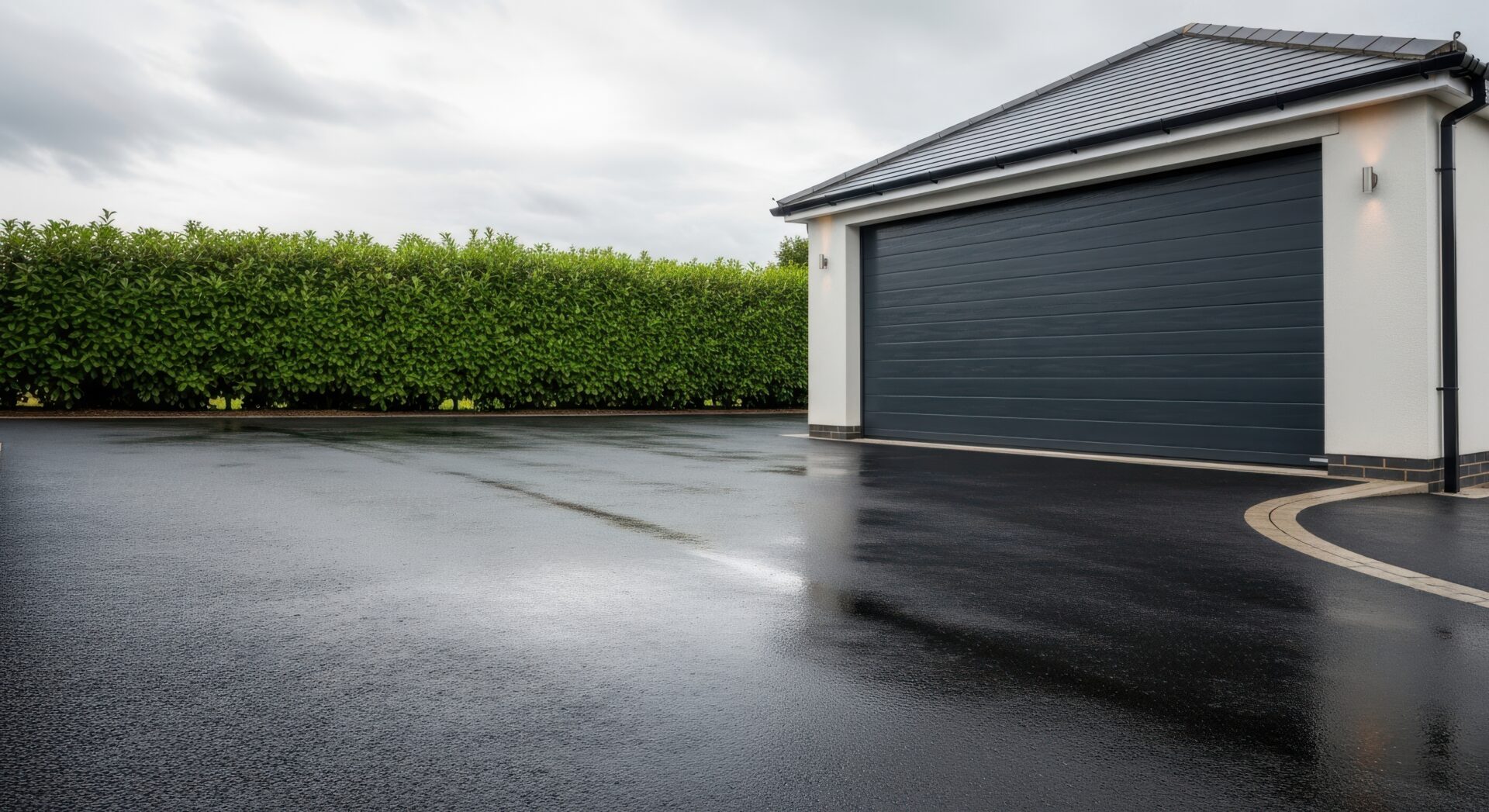
When homeowners think about a new tarmac driveway, they often focus on the visible surface. A smooth black finish, neat edges and a clean layout are all important, but the true strength of a tarmac driveway starts underneath. The sub-base is what supports the surface, spreads vehicle weight and helps the driveway remain stable through changing weather and daily use.
For Swansea properties, this matters even more. Driveways often have to cope with regular rain, slopes, older ground conditions and repeated vehicle movement. If the preparation below the tarmac is poor, the finished surface can suffer long before it should. Cracking, sinking, puddling and uneven areas are often not surface problems at all. They are signs that the base was not properly prepared.
At Regal Resin Group, tarmac driveways are installed with careful attention to the groundwork as well as the final finish. This guide explains why sub-base quality matters and what homeowners should understand before investing in a new driveway.
The Sub-Base Is the Driveway’s Foundation
A driveway is only as strong as the structure beneath it. The sub-base sits below the visible tarmac layers and provides the foundation for the whole installation. Its job is to create a stable, load-bearing platform that can support cars, vans and regular movement without shifting. As the Asphalt Industry Alliance explains, asphalt is made from aggregate, bitumen and filler materials, which is why the supporting structure below the surface plays such an important role in long-term performance.
If the sub-base is too shallow, poorly compacted or made from unsuitable material, the driveway may look good at first but begin to fail over time. Soft spots can form, the surface can dip and water can collect in low areas. Once movement starts beneath the driveway, the tarmac above has very little chance of staying level.
A properly installed sub-base helps prevent these issues. It gives the surface strength, consistency and long-term reliability. For homeowners comparing contractors, this is one of the most important areas to ask about, because the best work is often the part you cannot see once the driveway is finished.
Why Swansea Conditions Make Preparation Important
Swansea’s weather can be tough on outdoor surfaces. Frequent rain, damp ground and seasonal changes all place pressure on driveways. A tarmac surface needs to be installed in a way that manages these conditions properly.
Poor drainage is one of the main reasons driveways deteriorate. If water cannot move away from the surface or through the correct channels, it can sit in low spots, weaken surrounding areas and contribute to long-term surface damage. On sloped driveways, water flow needs to be planned carefully so runoff does not create problems near entrances, pavements or neighbouring properties.
Ground conditions also vary from home to home. Some driveways are built over older surfaces, compacted soil or areas that have been altered over time. This is why a professional assessment is useful before installation begins. A good contractor will not simply lay tarmac over a weak or unsuitable base and hope for the best.
Excavation Sets the Standard
Before a strong sub-base can be installed, the existing area often needs to be excavated. This may involve removing old surfacing, loose ground, damaged concrete, failed paving or unsuitable material. The depth of excavation depends on the site, the intended use and the condition of what is already there.
This stage is not glamorous, but it is essential. If weak material is left below the driveway, it can continue to move after the new surface is installed. That movement eventually transfers upward, causing dips, cracks or uneven areas.
Good excavation also creates the correct levels for the new driveway. The surface needs to sit at the right height in relation to the property, pavement, drainage points and surrounding landscaping. Rushing this stage can create problems with water flow, access and the overall finish. For long-lasting tarmac driveways, careful excavation is one of the first signs of a professional installation.
Compaction Is What Gives the Base Strength
Installing sub-base material is only part of the job. It also needs to be compacted properly. Compaction locks the material together, reduces air gaps and creates the firm structure needed to support the tarmac above.
If the base is not compacted enough, it can settle after the driveway is in use. This settling may not happen evenly, which is why some areas can dip while others remain level. Heavy vehicle tyres can then exaggerate the problem, especially where cars are parked in the same place every day.
Professional compaction is usually completed in layers rather than treating the sub-base as one thick mass. This helps create a more consistent foundation throughout the driveway. The result is a stronger, more reliable surface that is better able to cope with regular use.
Drainage Must Be Planned Before the Tarmac Is Laid
Drainage should never be treated as an afterthought. Once the tarmac has been installed, correcting water issues becomes more difficult and more disruptive. The best time to plan drainage is during the preparation stage, while levels, falls and edges are still being formed.
A well-designed driveway should guide water away from the property and prevent standing water wherever possible. This may involve creating the correct fall, installing drainage channels or shaping the driveway so water moves naturally to suitable areas.
The right solution depends on the site. A flat urban driveway may need a different approach from a longer sloped drive or a property with limited drainage points. This is why experience matters. Regal Resin Group considers drainage as part of the overall installation process, helping the finished tarmac surface perform well in real conditions rather than only looking good on completion.
Edging Helps Protect the Driveway
Edging is often seen as a design feature, but it also has a practical role. Strong edging helps contain the driveway structure, define the surface and reduce the risk of weak edges breaking away over time.
Tarmac driveways can be finished with a variety of edge details depending on the property. Block paving borders, kerbs or other hard restraints can give the driveway a cleaner appearance while supporting the structure. This is especially useful where the tarmac meets lawns, gravel, planting areas or older paved surfaces.
Without good edge support, the sides of a driveway can become vulnerable to wear, especially if vehicles regularly turn across them. A properly restrained driveway feels more finished and performs better under daily use.
The Surface Layer Still Matters
Although the sub-base is critical, the visible tarmac layer still needs to be installed correctly. The material should be laid evenly, compacted properly and finished to suit the shape and use of the driveway. A smooth surface improves appearance, comfort and drainage.
However, even the best tarmac finish cannot compensate for poor preparation underneath. This is why homeowners should be cautious of quotes that focus only on the top layer or promise quick results without explaining the groundwork. A driveway is a complete system, and every layer matters.
A professional installation combines excavation, sub-base preparation, compaction, drainage planning, edging and surface finishing. When all of these elements are handled properly, tarmac becomes a highly durable and cost-effective driveway option.
Avoiding False Economy
It can be tempting to choose the cheapest driveway quote, especially when the finished surfaces appear similar at first glance. The problem is that shortcuts in the sub-base are often hidden until months or years later. By the time sinking, cracking or drainage issues appear, repairs can be more frustrating and expensive than doing the job properly in the first place.
A well-prepared tarmac driveway should be seen as a long-term investment. It supports daily parking, improves access and helps the front of the property look cleaner and more organised. Saving money by reducing excavation depth, using poor material or skipping compaction can undermine the whole project.
The better question is not simply how much the driveway costs, but what is included in the preparation. Homeowners should feel confident that the contractor has allowed for the work required beneath the surface.
Working with Experienced Local Installers
Local experience is valuable because driveway conditions vary across Swansea and South Wales. Contractors who regularly work in the area understand the impact of rainfall, slopes, older properties and different ground types. They can also advise on practical design choices that suit the property rather than offering a generic installation.
Regal Resin Group installs tarmac driveways and surfacing with a focus on long-term performance as well as appearance. From the first assessment to the final finish, the team can explain what preparation is needed and why it matters. For homeowners who want to understand the installation process before committing, Our Team can provide clear, practical guidance.
A Strong Tarmac Driveway Starts Below Ground
The surface of a tarmac driveway may be what people notice first, but the sub-base is what determines how well it performs. Proper excavation, suitable materials, careful compaction, drainage planning and strong edging all contribute to a driveway that can withstand regular use and Swansea’s changing weather.
A good tarmac driveway should not only look neat on the day it is installed. It should remain stable, practical and presentable over the long term. That level of quality starts before the tarmac is laid, with the preparation beneath it.
Regal Resin Group provides professional tarmac driveway installations across Swansea and South Wales, with each project planned around the property and its ground conditions. For advice on a new driveway, resurfacing options or a tailored quotation, contact us to discuss your project.