


Could the addition of a second entrance be the single most transformative investment you make for your Swansea estate this year? While the prospect of a prestigious, multi-car entrance promises to elevate your property’s value and daily convenience, the path to achieving it often feels clouded by regulatory uncertainty. You likely share the common anxiety of navigating the subtle differences between classified and unclassified roads, or perhaps you’re tired of the precarious dance of reversing onto a busy highway. It’s understandable to fear that a simple home improvement could lead to council enforcement if you haven’t fully secured the correct planning permission for second driveway swansea residents require in 2026.
This guide provides a clear roadmap to legal compliance, ensuring your project integrates seamlessly with your existing landscaping while meeting the highest standards of safety. We’ll demystify the complexities of Swansea Council regulations, from the necessity of permeable surfaces to the essential approvals for dropped kerbs. By the end of this article, you’ll possess the knowledge to transform your property access into a statement of quality and meticulous planning that stands as a guardian of your home’s long-term legacy.
Key Takeaways
- Understand the specific legal triggers that mandate a full planning application when installing a second access point on Swansea’s classified A, B, and C roads.
- Master the complexities of planning permission for second driveway swansea properties by identifying how Article 4 Directions in conservation areas like Mumbles impact your development rights.
- Learn the essential safety criteria for vehicular crossovers, including visibility splays and the “forward gear” mandate required for safe egress onto busy highways.
- Navigate the 2026 SUDS framework to ensure your project remains environmentally compliant through the strategic use of permeable, high-end surfacing solutions.
- Discover how an artisan-led approach to groundwork and design can transform a functional requirement into a prestigious architectural feature that increases your home’s legacy.
The Vision of Multi-Access Estates: Why a Second Driveway in Swansea Requires Strategic Planning
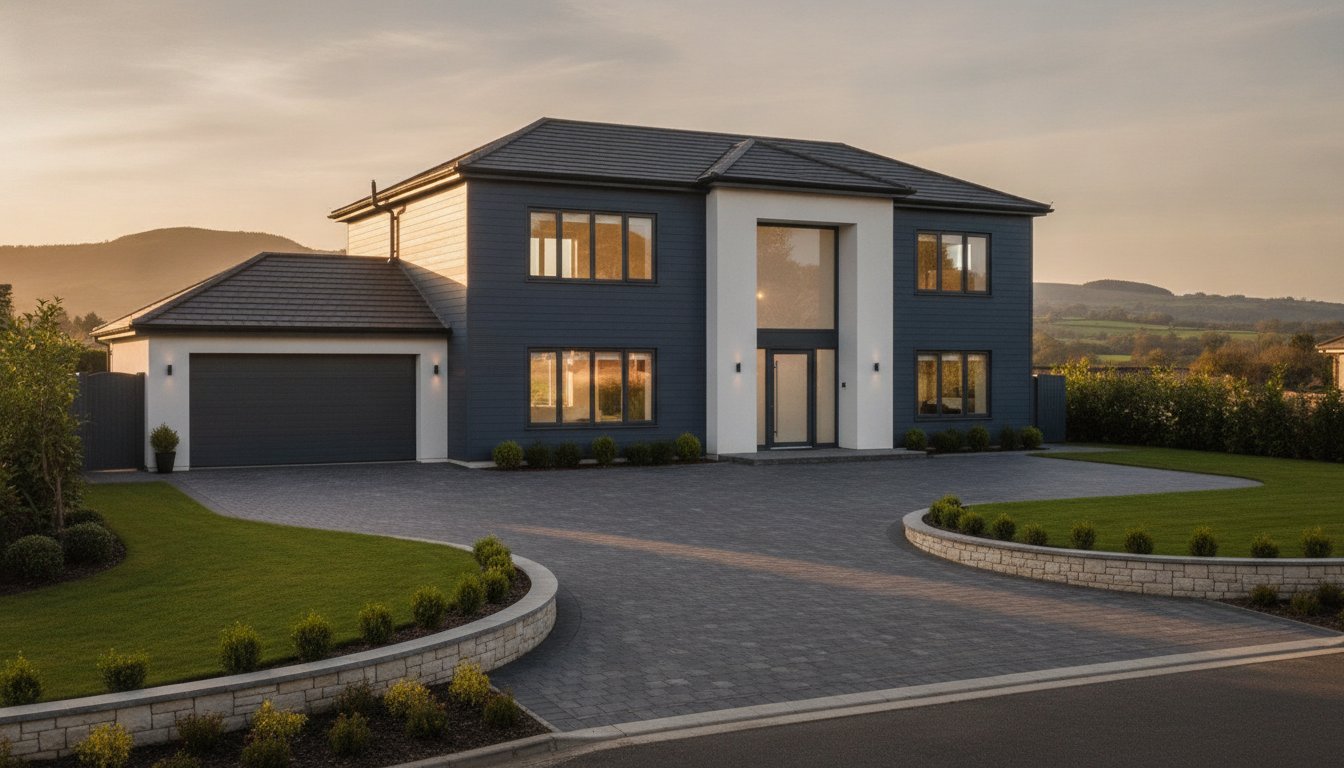
Swansea’s premier residences are increasingly defined by their fluidity. A second driveway, defined as an additional vehicular access point to a single residential curtilage, represents a strategic shift from simple utility to a more sophisticated estate management approach. It is no longer merely about finding a place to park; it’s about the architectural flow of the property. This “dual-gate legacy” creates a sense of arrival that mirrors the prestige of the home itself, allowing for a seamless transition between the public highway and the private sanctuary.
The necessity for such expansions has surged in 2026. As multi-car households become the standard and the transition to electric vehicles accelerates, the demand for dedicated EV charging zones has transformed driveway design. A secondary entrance allows for the segregation of vehicles, ensuring that daily commuters, guest parking, and high-voltage charging points coexist without cluttering the property’s visual narrative. However, this vision requires meticulous foresight. Securing planning permission for second driveway swansea projects is often more complex than the initial installation, as the council must weigh individual convenience against the broader impact on the local environment.
While “Permitted Development” rights often grant homeowners the freedom to improve their land, these rights are notably more restrictive for a second entrance. The council views a secondary access point as a potential disruption to the established streetscape and highway safety. When Navigating the Legal Threshold of these regulations, homeowners must realize that the authority’s priority is maintaining the integrity of the public realm while facilitating modern lifestyle needs.
The Distinction Between Surfacing and Access
It’s vital to distinguish between the physical driveway and the vehicular crossover. You might choose a high-end resin driveway or a classic tarmac surface for your internal land, but the act of cutting the public kerb falls under a different legal jurisdiction. Even if your chosen surfacing is considered “permitted,” the creation of a new access point almost always requires formal approval. The Highways Act 1980 governs these crossovers, ensuring that any new entrance does not compromise the safety of pedestrians or the structural integrity of the pavement. Total ownership of the project means understanding that the council’s highways department and the planning department often operate as two distinct, yet echoing, voices.
The Environmental and Civic Responsibility
Swansea Council maintains a vigilant eye on the “loss of verge” that occurs when properties expand their access points. Every new entrance reduces the available green space and public parking, making it essential to balance your private convenience with the preservation of the local streetscape. A successful application demonstrates a commitment to the community’s aesthetic and environmental health. This involves choosing materials that complement the existing architecture and respecting the natural boundaries of the neighborhood.
SUDS compliance stands as the non-negotiable cornerstone of modern Swansea driveway planning, ensuring that every new surface respects the natural water cycle of our coastal environment.
Navigating the Legal Threshold: When is Planning Permission Mandatory for a Second Access?
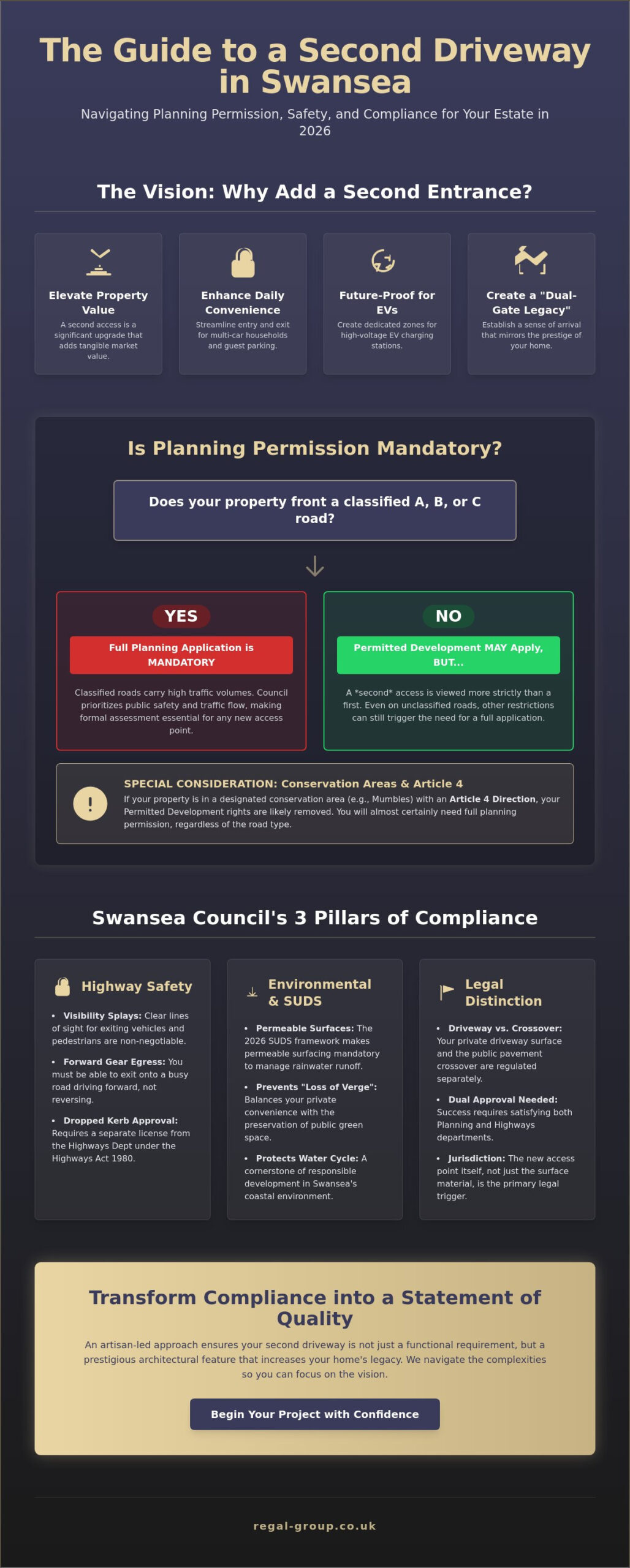
Determining the legal necessity for a second entrance requires more than a cursory glance at local guidelines. While the vision of an expansive estate is inspiring, the reality of planning permission for second driveway swansea depends heavily on your property’s specific geography. The most significant factor is the classification of your road. If your home faces an A, B, or C road, Swansea Council mandates a full planning application. These classified highways carry higher traffic volumes, making any new vehicular access a matter of public safety and highway management.
Beyond road classification, the structural nature of your home plays a decisive role. Flats and maisonettes don’t enjoy the same permitted development rights as single-family houses. For these residents, any change to the external appearance or access of the property requires formal consent. Similarly, if you live in a conservation area like Mumbles or the Gower, Article 4 Directions may have been enacted. These directions strip away standard rights to preserve the historic character of the landscape, requiring an artisan’s eye to ensure any new driveway respects the architectural heritage of the region.
Classified vs. Unclassified Roads in Swansea
Identifying your road’s status is a critical first step. Tools like FindMyStreet provide an immediate classification, helping you understand if your project faces a streamlined path or a rigorous application process. Unclassified cul-de-sacs often offer greater flexibility for a second entrance. However, creating a “through-driveway” or an in-and-out system requires careful planning. These systems must ensure that cars can enter and exit in a forward gear, particularly on busy routes, to maintain the safety and rhythm of the local community.
The Permitted Development Trap
Even if your road is unclassified, a “permitted development trap” can exist. Some properties have their rights removed through conditions attached to the original planning permission. Any new surface exceeding 5 square metres must be porous or run off into a natural drainage area. Mastering SUDS and Drainage is essential here; choosing impermeable materials without a plan for water management will trigger a mandatory application. This rule ensures that your planning permission for second driveway swansea strategy remains environmentally sound and legally robust.
A second driveway can sometimes be viewed as a material change of use for a front garden, shifting it from a soft landscape to a hard-standing area. To avoid future disputes and protect your property’s legacy, obtaining a Lawful Development Certificate is a wise investment. This document provides a definitive legal record that your work was compliant from the start. For those seeking absolute clarity, the Regal Group team offers the expertise to navigate these nuances, ensuring your vision is built on a foundation of total legal security.
Safety and Visibility: The Swansea Council Criteria for Vehicular Crossovers
Safety isn’t a secondary concern. It’s the primary lens through which all applications for an additional entrance are viewed. When proposing a new vehicular access, the council scrutinizes how your vehicle interacts with the existing flow of traffic. This scrutiny is especially intense near junctions. Swansea Council typically refuses any new access within 10 to 15 metres of a corner, as these areas are high-risk zones for collisions. Similarly, the presence of street furniture, such as lamp posts or utility boxes, can complicate your vision. Relocating these assets is occasionally possible, but it adds a layer of logistical complexity that requires professional management and significant foresight.
The most critical requirement for homes on busy roads is the “Forward Gear” mandate. The council insists that drivers must be able to enter and exit their property in a forward gear. Reversing onto a classified Swansea highway is considered a significant safety hazard. While a single driveway might sometimes bypass this if the road is exceptionally quiet, a second access point is held to a higher standard because the primary access already exists. You must prove that the new entrance enhances safety rather than compromising it. Successfully securing planning permission for second driveway swansea projects requires more than just an aesthetic eye; it demands an engineering mindset.
The Turning Circle Requirement
Achieving compliance often hinges on the internal layout of your grounds. You must design a space that allows for a full three-point turn on-site without encroaching on the pedestrian footway. The feasibility of your second entrance is directly tied to the scale of your front garden. For many homeowners, this means integrating a sophisticated turning zone into their landscaping services south wales strategy. A well-designed resin or tarmac area can serve both as a prestigious parking bay and a functional turning circle, maintaining the property’s aesthetic balance while satisfying the Swansea Council Planning Guidance.
Highway Safety Assessments
During the application process, a Swansea Council Highways Engineer will conduct a site visit. They focus on visibility splays, which are the clear sightlines required for a driver to see oncoming traffic and pedestrians. The technical success of your planning permission for second driveway swansea application often depends on these precise measurements. High pillars or ornate gates might look regal, but if they create blind spots for passing cyclists or cars, they’ll be rejected. Our team coordinates with these highway standards during the groundworks phase, ensuring that every pillar and fence line is positioned with mathematical precision. We take total ownership of the technical requirements, allowing you to focus on the vision of your completed estate.
Sustainable Elegance: Mastering SUDS and Drainage for Your Dual-Driveway Project
True luxury in estate design is often found in the invisible details. While the visual impact of a second entrance is undeniable, its legal viability in 2026 rests heavily on how it interacts with the Welsh environment. The Swansea Council SUDS (Sustainable Drainage Systems) framework mandates that all new hard surfaces must manage surface water on-site. This requirement is particularly pertinent when securing planning permission for second driveway swansea, as the cumulative impact of multiple paved areas can significantly strain local infrastructure. By ensuring your project breathes, you aren’t just complying with the law; you’re protecting the long-term legacy of your land.
The “5 Square Metre Rule” serves as a critical threshold for homeowners. Any new driveway surface exceeding this area must be constructed from porous materials or be designed to direct runoff to a permeable area within the property. Since a second driveway almost always exceeds this dimension, the choice of material becomes a strategic decision. Failing to address this leads to the “Rainwater Tax,” where homeowners may face additional charges for contributing to the public sewer system. Professional planning ensures that your property remains a self-sustaining sanctuary that avoids these unnecessary civic costs.
The Resin Bound Advantage
Resin bound surfacing has emerged as the gold standard for those seeking a prestigious aesthetic without the regulatory hurdles of traditional paving. Unlike tarmac or concrete, which often require complex additional drainage channels, a high-quality resin system is naturally permeable. It allows water to filter through the surface and back into the ground, mirroring the natural water cycle. This is especially vital given the high rainfall levels in South Wales. For a deeper material analysis, you can explore our guide to resin driveways swansea, which details how this artisan finish balances durability with environmental responsibility.
Integrating Groundworks and Drainage
A surface is only as resilient as the foundation beneath it. To achieve true SUDS compliance, the sub-base layers must be engineered to act as a reservoir, temporarily holding rainwater before it naturally dissipates. This is why professional driveway groundworks are the foundation of legal compliance and structural longevity. While porous materials allow water to pass through the surface, redirected runoff involves active engineering to move water to soakaways or rain gardens. Our methodology focuses on total ownership of this process, ensuring that your planning permission for second driveway swansea application is supported by robust technical data.
If you are ready to transform your property access with a compliant, high-end solution, contact the Regal Group experts today to begin your site assessment.
The Regal Group Methodology: Executing Compliant, High-End Driveway Expansions
Total ownership is the hallmark of our approach. We don’t just provide a service; we act as the architects of your property’s future. Our in-house team manages every variable, from the initial topographical survey to the final, hand-finished resin application. This comprehensive involvement ensures that the complexities of securing planning permission for second driveway swansea properties are handled with professional efficiency, leaving you to simply enjoy the transformation of your estate. We take pride in our ability to balance the technical demands of local authorities with the lifestyle aspirations of our clients.
We view each project through an artisan’s lens. A second entrance shouldn’t feel like an afterthought; it should appear as a vital, original feature of the residence. By meticulously matching materials and respecting existing architectural lines, we create a sense of cohesion that enhances your home’s prestige. This isn’t just construction. It’s a commitment to quality and a celebration of your property’s legacy. Our deep experience with Swansea Council highway requirements allows us to navigate the technical crossover process with confidence, ensuring every design is as legally robust as it is visually striking.
From Consultation to Completion
Our journey begins with a detailed site survey designed to identify potential planning hurdles before a single spade touches the soil. We analyze road classifications and existing utility locations to ensure your project rests on a foundation of certainty. The precision of our groundworks team is paramount, particularly when preparing the structural base for a new vehicular crossover. We ensure the new expansion mirrors the craftsmanship of your original driveway, creating a unified and elegant arrival experience that stands the test of time. Every layer we lay is a testament to our unwavering commitment to excellence.
Your Next Steps to an Enhanced Estate
Moving from vision to reality requires mathematical precision and a steady hand. Professional drawings are the heartbeat of a successful planning application, providing the council with the clear, technical data they require to approve your vision. Booking a comprehensive site assessment with our Swansea specialists is the first step toward securing your property’s future. We provide the expertise needed to navigate the planning permission for second driveway swansea process, ensuring every detail aligns with both local regulations and your personal standards for luxury.
Contact Regal Group for a visionary consultation on your second driveway to begin the journey toward an enhanced architectural legacy and a property that truly reflects your success.
Securing Your Property’s Architectural Legacy
Expanding your home’s access is a visionary step toward modern estate management, yet it requires a meticulous balance of aesthetic ambition and legal precision. You’ve learned that successful development hinges on mastering the “Forward Gear” mandate and ensuring that your chosen materials meet the strict 2026 SUDS framework. Navigating the specific requirements for planning permission for second driveway swansea authorities demand doesn’t have to be a source of anxiety when you partner with experts who hold total ownership of the process.
Our in-house expert team operates without subcontractors, ensuring that every phase of your project reflects our unwavering commitment to quality. As specialists in SUDS-compliant resin surfacing, we create prestigious entrances that are as environmentally responsible as they are visually striking. We remain deeply familiar with Swansea Council highway standards, allowing us to seamlessly integrate your second access point into the existing public landscape. Begin your estate transformation with a bespoke driveway consultation and take the first step toward a property that truly reflects your lifestyle. Your vision for a multi-access sanctuary is within reach.
Frequently Asked Questions
Do I need planning permission for a second driveway in Swansea?
Yes, you’ll generally require formal consent if your property borders a classified road (A, B, or C) or is situated within a conservation area. Even if the surfacing itself is considered permitted development, creating a new access point requires separate approval from the highways authority. Securing planning permission for second driveway swansea projects ensures your new entrance meets all modern safety and environmental standards.
Can I have two separate entrances to my house?
You can certainly have two entrances provided they don’t compromise highway safety or the rhythm of the local streetscape. The council evaluates these “in and out” systems based on their impact on public parking and the ability of vehicles to enter and exit in a forward gear. A well-designed dual access point can significantly enhance the architectural flow and prestige of a premier residence.
What is the cost of a second dropped kerb in Swansea?
Application fees to the council for a vehicular crossover typically range from £100 to over £350. While installation costs vary based on the specific site requirements, the average cost to install a dropped kerb is approximately £2,000. These figures reflect the technical precision and approved contractor status required to modify the public highway safely.
Will a second driveway increase my property value in South Wales?
How close can a second driveway be to a junction in Swansea?
Swansea Council typically mandates that any new vehicular access must be at least 10 to 15 metres away from a road junction or corner. This distance is vital to maintain clear visibility splays for both drivers and pedestrians. Proposing an entrance too close to a junction is a frequent cause for application refusal due to increased collision risks.
What happens if I install a second driveway without planning permission?
Installing an unauthorized access can lead to council enforcement action, including substantial fines and a legal requirement to reinstate the land to its original state. It’s also a specific offense under the Highways Act 1980 to drive over a public footway without an approved crossover. This can complicate future property sales and diminish the home’s legal standing.
Do I need a turning circle for a second driveway?
A turning area is almost always mandatory if your property faces a busy or classified road. The council’s “Forward Gear” mandate requires you to be able to turn a car within your own curtilage so you don’t have to reverse onto the highway. Integrating this space into your landscaping ensures the project remains compliant while adding to the estate’s functional luxury.
How long does the Swansea Council planning process take for a new access?
Most householder planning applications receive a decision within approximately eight weeks. However, you should also account for the time required for the highways department to approve the vehicular crossover and for site surveys to be completed. Meticulous planning and professional drawings are essential to avoid delays and ensure a smooth transition from consultation to completion.