


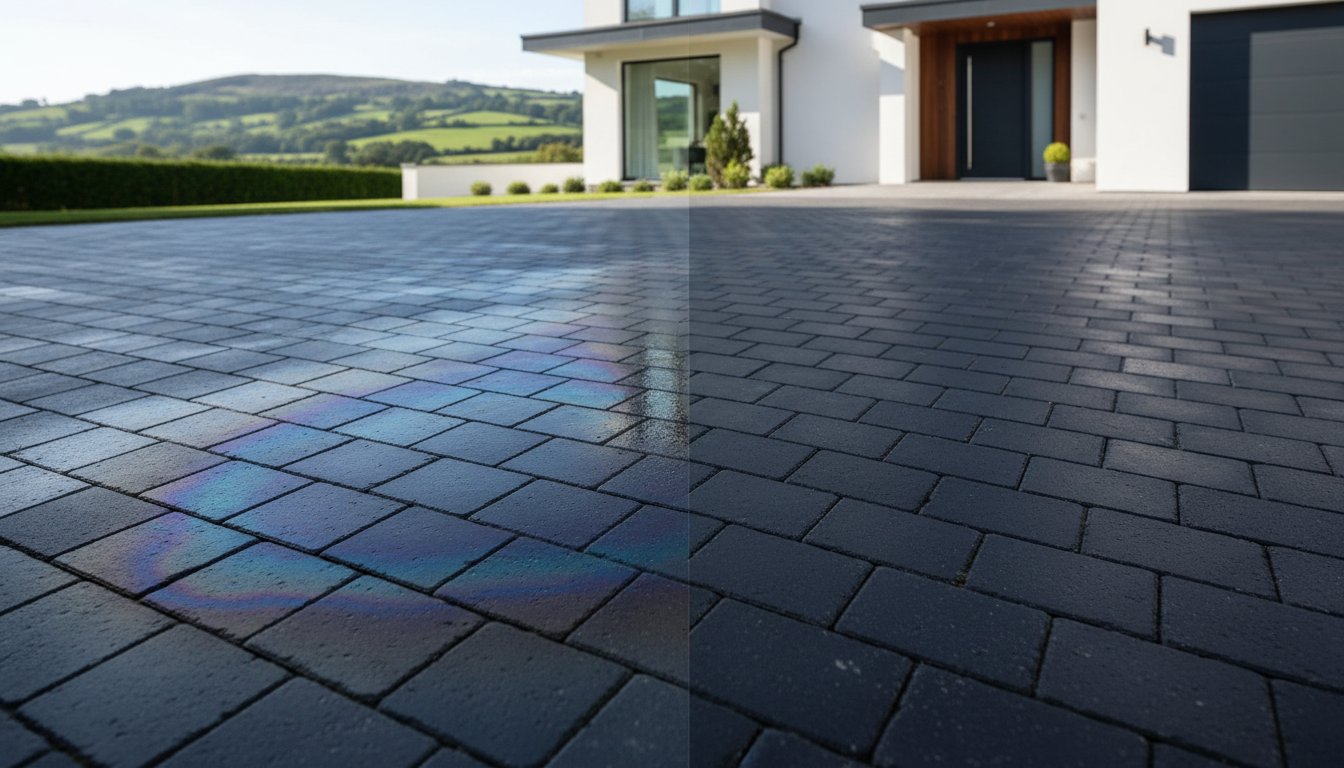
Could a single mechanical failure quietly devalue your home’s most prominent architectural feature? For many Swansea homeowners, the sight of a dark, iridescent patch on a bespoke driveway is more than an eyesore; it’s a threat to the integrity of a significant investment. You’ve likely experienced the frustration of ineffective supermarket cleaners that promise much but deliver little, leaving you anxious about whether a more aggressive chemical might permanently erode your tarmac or resin surface. Understanding exactly how to clean a driveway oil stain is essential for anyone who views their property as a lasting legacy rather than just a place of residence.
We believe your home’s entrance should reflect the same commitment to quality as the interior. This professional guide provides the sophisticated techniques required to remove unsightly blemishes and preserve the prestigious appearance of your Swansea driveway. You’ll discover which pH-neutral products are safe for specific substrates and how to implement a maintenance routine that prevents future leaks from penetrating deep into the stone. We will walk you through the precise restoration process that ensures your property remains a beacon of urban excellence, maintaining its value and curb appeal for years to come.
Key Takeaways
- Understand why prompt action is vital in the Swansea climate to prevent oil from acting as a solvent and permanently compromising your driveway’s structural integrity.
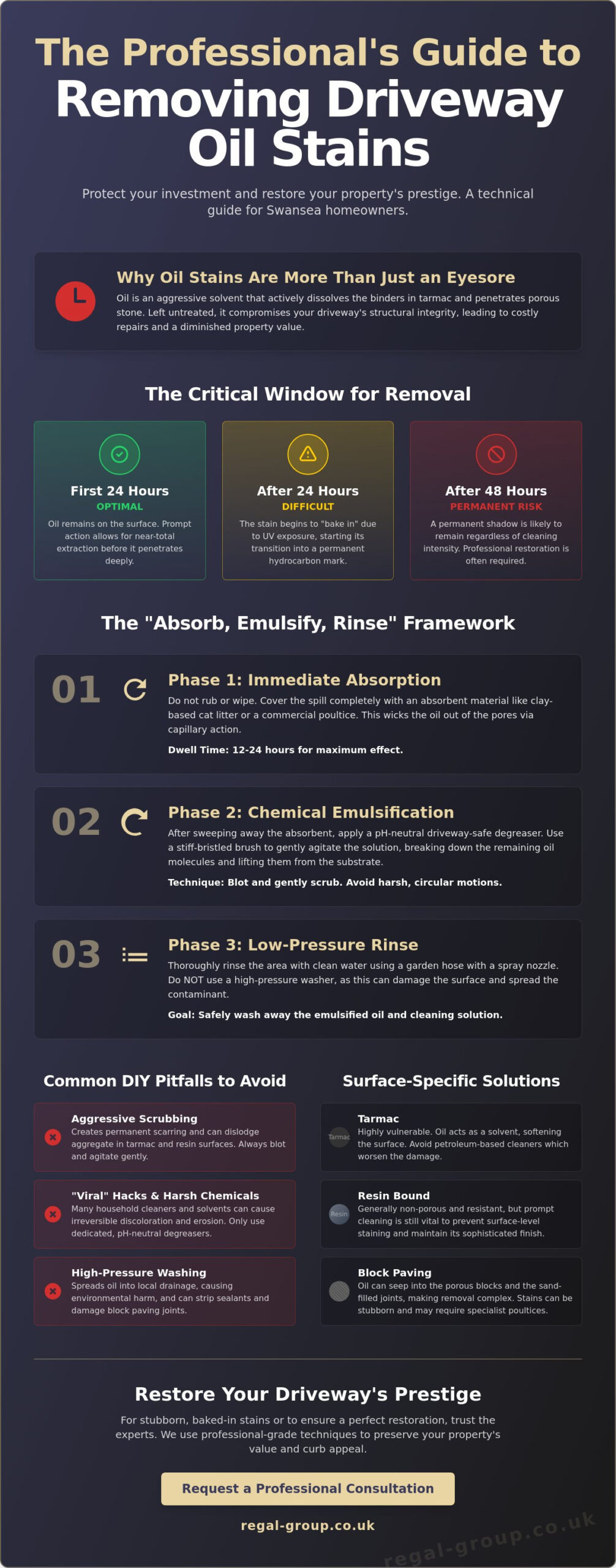
- Master the professional “Absorb, Emulsify, Rinse” framework to learn exactly how to clean a driveway oil stain while protecting the sophisticated finish of your property.
- Identify the distinct requirements for Tarmac, resin, and block paving to ensure your cleaning approach respects the unique chemistry and craftsmanship of each surface.
- Avoid common DIY pitfalls and “viral” hacks that risk creating irreparable aesthetic damage and diminishing the prestigious entrance to your home.
- Learn how to evaluate when a stain necessitates a transition from simple maintenance to a visionary professional restoration to preserve long-term property value.
The Critical Window: Why Prompt Action Matters for Swansea Driveways
A driveway represents the initial handshake between a property and its visitors, serving as a testament to the home’s integrity and the owner’s commitment to excellence. In the coastal environment of Swansea, where the city experiences an average of 1,100mm of rainfall annually, maintaining this threshold requires more than occasional maintenance. When a vehicle leaks, understanding how to clean a driveway oil stain becomes a race against chemical degradation. Oil is not a passive liquid; it is an aggressive solvent. On bitumen-based Tarmac surfaces, the oil begins to dissolve the very binders that hold the aggregate together, leading to structural failure if left unaddressed.
The first 24 hours represent a decisive period for successful restoration. During this window, the oil remains largely on the surface, held by the initial tension of the material. Once this period passes, the spill transitions from a fresh surface puddle to a “baked-in” hydrocarbon stain. This transition is accelerated by UV exposure and the porous nature of local stone. Prompt intervention ensures the substance is lifted before it integrates with the driveway’s molecular structure, preserving the craftsmanship of the original installation without the need for professional resurfacing.
Effective restoration relies on understanding the science of stain removal, which dictates that mechanical action must be paired with the correct chemical counter-agent. Waiting even 48 hours can result in a permanent shadow that persists regardless of the cleaning intensity. For Swansea homeowners, the stakes are heightened by the high humidity levels, which can trap moisture beneath the oil layer, creating a micro-environment that further weakens the driveway’s foundation.
The Science of Hydrocarbon Penetration
Oil utilizes capillary action to travel deep into the microscopic pores of concrete and natural stone. As it descends, it disrupts the molecular bond of the binders that provide the driveway its load-bearing strength. Hydrocarbon leaching serves as the primary cause of Tarmac softening, where the oil’s chemical structure effectively unbinds the aggregate. This process transforms a solid, visionary architectural feature into a fragile, crumbling surface that requires bespoke repair rather than simple cleaning.
Environmental Impact in South Wales
Swansea’s unique geography means that residential runoff often flows directly into sensitive local ecosystems, including the River Tawe and the Gower coastline. Hosing down an oil spill is an ecological mistake that can lead to significant fines under the Water Resources Act 1991. Instead of removing the problem, high-pressure water simply disperses oil molecules into the drainage system. Responsible homeowners must contain the spill locally to prevent how to clean a driveway oil stain from becoming a matter of environmental negligence. Using absorbent materials ensures the integrity of the local water table remains uncompromised.
A Professional Three-Step Method for Removing Oil Stains Safely
Protecting the architectural integrity of your property requires more than just aesthetic maintenance; it demands a technical understanding of surface chemistry. Surfacing experts rely on a disciplined “Absorb, Emulsify, Rinse” framework to ensure the underlying structure remains untarnished. When considering how to clean a driveway oil stain, your primary objective is to extract the contaminant without causing surface scarring. Professionals always prioritise blotting over aggressive scrubbing, as the latter can permanently distort the aggregate profile of your entrance. Before beginning, ensure you’re wearing nitrile gloves and eye protection, and use plastic sheeting to shield any adjacent box hedging or delicate landscaping from chemical runoff.
Phase 1: Immediate Absorption
The initial response determines the long-term success of the restoration. Apply absorbent granules, such as high-grade cat litter or specialised clay-based poultices, to wick the liquid oil from the pores of the stone. For a standard 10cm spill, a dwell time of 12 to 24 hours is recommended to ensure maximum capillary action. Don’t rush this process; the longer the material sits, the less deep-cleaning you’ll need later. In Swansea, oil-soaked materials are classified as hazardous waste. They should be taken to the Llansamlet Household Waste and Recycling Centre rather than being placed in domestic bins, ensuring your maintenance routine aligns with local environmental standards.
Phase 2: Targeted Degreasing
Once the surface oil is removed, the remaining residue requires chemical intervention. You can choose between heavy-duty alkaline cleaners or modern biological solutions that utilise “oil-eating” bacteria to break down hydrocarbons. This stage is particularly delicate when maintaining resin driveways swansea homeowners choose for their bespoke, seamless finish, as harsh solvents can compromise the resin bond. Use a soft-bristled brush to gently agitate the solution. Researching various techniques for removing driveway stains shows that patience during this emulsification phase prevents the need for abrasive force that might strip the surface colour.
Phase 3: Controlled Rinsing
The final stage involves a “low-and-slow” rinse to lift the emulsified residue. While high-pressure washing might seem efficient, it often forces oil deeper into the substrate or causes “pitting” in the surface material. Use a standard garden hose with a steady flow, moving from the highest point of the driveway downwards. Conduct a final inspection once the area is dry. If a faint shadow remains, a second application of biological degreaser may be necessary to restore the pristine aesthetic of your home’s exterior. If the damage appears structural or the staining is widespread, consulting with a professional surfacing partner can provide a more permanent restoration strategy for your property’s legacy.
Surface-Specific Solutions: Tarmac, Resin, and Block Paving
The architectural integrity of a Swansea property is often reflected in its approach to maintenance. A driveway isn’t just a functional path; it’s a bespoke element of a home’s character and a significant part of its kerb appeal. When you’re determining how to clean a driveway oil stain, you must first understand the material’s unique chemistry. Treating a delicate resin surface with the same aggression as a concrete slab will lead to aesthetic degradation and long-term structural failure.
Tarmac and Asphalt Restoration
Tarmac requires a gentle touch to preserve its structural binder. The bitumen that holds the aggregate together is a petroleum-based product, meaning it’s highly susceptible to dissolution by harsh degreasers. You should avoid citrus-based cleaners at all costs. These organic solvents can trigger “ravelling,” a process where the stones become loose and the surface begins to disintegrate. If the oil has caused the surface to feel soft or spongy, the damage is structural. In these cases, a professional patch repair is the only way to ensure safety. For surface-level marking, a high-quality seal coat can be applied after cleaning to restore the deep, uniform finish that defines a prestigious entrance.
Resin-Bound and Resin-Bonded Surfaces
Resin systems are prized for their durability and visionary design. One of their primary advantages is natural permeability. This allows water and cleaning agents to flush through the system, often making it easier to lift contaminants before they settle. However, the aesthetic finish is sensitive. Using the wrong solvent can cause the resin to cloud, permanently dulling the vibrant stone beneath. To maintain the elite standard of a Regal Group installation, use only approved, non-clouding detergents. These preserve the clarity of the resin while effectively lifting the oil from the aggregate without compromising the bond.
Block Paving and Natural Stone
The challenge with block paving lies in the jointing sand. Oil quickly migrates into these gaps, potentially reaching the sub-base and compromising the foundation. If an individual block is heavily saturated, the most effective restoration method is a “lift and replace” strategy. This involves removing the damaged units and replacing both the block and the underlying sand to prevent the oil from spreading. Beyond oil stains, block paving owners should also be aware that disturbed jointing sand creates the ideal conditions for invasive plant growth; understanding how to stop weeds in block paving is an equally important part of preserving the long-term integrity of your entrance. When you are learning how to clean a driveway oil stain on natural stone like sandstone, precision is vital. Sandstone often contains iron; using acidic cleaners can trigger a chemical reaction that leaves permanent orange streaks. Always utilise pH-neutral solutions to ensure the stone’s natural legacy remains untarnished.
Tailoring your approach to the specific durability of your driveway ensures that the cleaning process doesn’t become more damaging than the stain itself. Whether it’s the delicate bitumen of tarmac or the porous joints of block paving, professional-grade results require an understanding of these material boundaries.
Common DIY Pitfalls and How to Protect Your Surface Integrity
Maintaining the aesthetic integrity of your property requires more than just enthusiasm; it demands a nuanced understanding of material science. Many homeowners, in an earnest attempt to resolve unsightly spills, inadvertently cause irreparable damage to their bespoke surfaces. Popular “viral” remedies, such as pouring cola over a spill or applying harsh domestic bleach, are fundamentally flawed. These substances introduce acidic or corrosive elements that can etch into the substrate, often leaving a permanent shadow. Similarly, the belief that the frequent Welsh rain will eventually wash the oil away is a dangerous misconception. This delay allows the contaminant to penetrate deeper into the porous structure of the stone or tarmac, making eventual removal significantly more complex. You should also strictly avoid the use of blowtorches. Intense heat causes immediate thermal shock, leading to spalling in concrete and the complete liquefaction of the bitumen binders in tarmac surfaces.
The Myth of Household Detergents
Standard washing up liquid is designed for surface-level grease on non-porous ceramics, yet it lacks the chemical sophistication of industrial degreasers engineered for heavy hydrocarbons. Using the wrong concentration often leads to “surfactant staining,” a phenomenon where detergent residues bond with the substrate to create a new, stubborn mark. Bleach is particularly destructive as it aggressively leaches the pigment from coloured driveway aggregates, resulting in a patchy, faded appearance that compromises the visual harmony of your home’s exterior. Learning how to clean a driveway oil stain effectively involves selecting pH-neutral, professional-grade emulsifiers that break down the oil without stripping the stone’s natural character or its protective sealants.
Pressure Washer Damage
High-pressure water is a blunt instrument that can easily compromise the longevity of high-end exterior surfaces. When a machine exceeds 3,000 PSI, it risks stripping the protective UV-stable coating from resin-bound systems or dislodging the essential “fines,” which are the small binding particles, from a tarmac surface. This erosion accelerates structural wear and leads to premature cracking. For routine driveway maintenance, ensure your equipment is set between 1,200 and 1,500 PSI and utilize a wide-fan nozzle to distribute the force evenly. Excessive scrubbing in a localized area often creates “light spots” or ghosting, where the cleaned patch becomes unnaturally bright, making the original stain look preferable to the cure. Understanding how to clean a driveway oil stain without over-agitating the surface is the difference between a successful restoration and a permanent scar.
If your driveway requires a professional touch to restore its original prestige, consult with Regal Group for visionary surface restoration and care.
Restoring the Prestige of Your Property’s Entrance in South Wales
A driveway represents the architectural prologue to your home’s story. While understanding how to clean a driveway oil stain is essential for immediate maintenance, there comes a point where the chemical bond between the oil and the substrate becomes irreversible. In these instances, the stain isn’t just an eyesore; it’s a catalyst for structural decay. If the oil has penetrated more than 5mm into the surface or has begun to dissolve the bitumen binder in tarmac, the integrity of the entrance is compromised. Professional restoration or a complete new installation can redefine the architectural value of a property, often increasing its market appeal by up to 10% according to UK property valuation trends.
Transitioning from simple cleaning to a full resurfacing project allows homeowners to align their entrance with modern aesthetic standards. A new installation isn’t merely a repair; it’s a visionary upgrade. Whether you choose the permeable elegance of resin-bound gravel or the timeless geometry of natural stone setts, the goal is to create a legacy finish that withstands the damp climate of South Wales while maintaining its pristine appearance.
Professional Assessment in Swansea
When DIY methods fail to lift a persistent shadow, it’s time to engage the Regal Group team for a comprehensive site evaluation. Our in-house experts possess a nuanced understanding of the local landscape, ensuring that every recommendation is grounded in architectural precision. Unlike general labourers who might offer a temporary mask, our team focuses on the long-term health of your driveway. You can request a bespoke quote that moves beyond simple cleaning to encompass full driveway rejuvenation. This ensures your home’s first impression remains elite, stable, and enduring for decades to come.
Preventative Strategies for the Future
Prevention is the hallmark of a well-managed estate. High-quality sealants act as a pioneering barrier, providing essential oil resistance that prevents fluids from penetrating the porous surface of your driveway. We recommend the following steps to protect your investment:
- Apply Professional Sealants: Re-seal your driveway every 24 to 36 months to maintain a hydrophobic shield. Pairing this routine with a comprehensive winter driveway care strategy ensures your surface remains protected against both oil penetration and the structural damage caused by South Wales’ seasonal frosts.
- Immediate Absorption: Keep a supply of professional-grade absorbent granules on hand for emergency spills.
Your driveway serves as the handshake of your home. It’s the first physical interaction a guest has with your property, setting the tone for the experience within. By investing in professional sealing and proactive care, you ensure this handshake is always impeccable. It reflects the pride and integrity you hold for your living environment, turning a functional necessity into a statement of luxury and care.
Preserving the Architectural Integrity of Your Swansea Entrance
Maintaining a pristine entrance is an act of stewardship for your home’s legacy. Swift intervention is the most effective defense against permanent damage. Oil penetrations can compromise the structural integrity of tarmac and resin surfaces within 48 hours if left untreated. By mastering the nuances of how to clean a driveway oil stain safely, you ensure that temporary spills do not become permanent scars on your property’s landscape.
Our artisans have spent over 10 years transforming South Wales environments through meticulous craftsmanship and visionary design. Our elite in-house Swansea team specializes in high-end resin and tarmac surfacing, ensuring every project meets the highest standards of durability and aesthetic excellence. We believe every home deserves a bespoke approach that reflects its unique character and value. Restore your property’s prestige with a free driveway assessment from Regal Group. Your driveway is the first chapter of your home’s story, and we’re here to help you keep it flawless.
Frequently Asked Questions
Can I use washing up liquid to clean an oil stain on my driveway?
Yes, you can use washing up liquid as an effective initial treatment for fresh spills. Its surfactants are designed to break down the molecular structure of grease, making it easier to lift the residue from the surface. For the best results, apply the liquid directly to the area, scrub it with a stiff brush, and rinse with warm water. This method is a foundational step in learning how to clean a driveway oil stain before the liquid penetrates deeper into the substrate.
Will a pressure washer remove old oil stains from tarmac?
A pressure washer is often insufficient for deep-set oil and can actually compromise the structural integrity of your tarmac. High-pressure water streams can strip away the bitumen binder that holds the aggregate together, leading to surface erosion and eventual potholes. While it’s a popular tool for general dirt, preserving the prestige of your Swansea property requires a chemical-based approach that draws the oil out rather than using brute force that might damage the driveway’s finish.
Is it possible to remove an oil stain that has been there for months?
It’s entirely possible to lift aged oil stains, though the process requires professional-grade degreasers or specialized poultices. These advanced formulas work over a period of 24 to 48 hours to draw the embedded hydrocarbons to the surface for extraction. While older stains are more stubborn, a meticulous restoration process can significantly fade the blemish. Achieving a completely pristine result often involves high-specification equipment that ensures the treatment reaches the deepest pores of the stone.
What is the best absorbent material for a fresh oil spill?
The most effective materials for immediate spill mitigation are clay-based cat litter or kiln-dried sand. These substances possess a high surface area that pulls liquid upwards through capillary action, preventing the oil from bonding with your driveway. You should apply the material generously and allow it to sit for at least 12 hours to maximize absorption. Taking this proactive step is essential when considering how to clean a driveway oil stain and maintain the sophisticated appearance of your home’s exterior.
Does oil damage the structural integrity of a resin driveway?
Oil can pose a serious threat to the cohesion of a resin-bound surface by potentially softening the polyurethane binder. If you don’t treat the spill quickly, the hydrocarbons can cause the stones to delaminate, which leads to patches and a shortened lifespan for the installation. Since a resin driveway is a bespoke investment in your property’s aesthetic, immediate neutralisation of any automotive fluids is vital to protect the long-term value and craftsmanship of the surface.
How much does it cost to have a driveway professionally cleaned in Swansea?
Professional driveway cleaning services in the United Kingdom typically range from £150 to £450 depending on the size of the area and the severity of the staining. These figures are based on 2024 industry averages from verified platforms like Checkatrade. For homeowners in Swansea, investing in a professional service ensures that the cleaning process is tailored to the specific local stone types, providing a level of care that preserves the architectural heritage of your neighborhood.
Are biological oil cleaners safe for my garden and pets?
Biological oil cleaners are a sustainable and safe choice for both your garden’s ecosystem and your pets. These innovative solutions use naturally occurring microbes that consume hydrocarbons and convert them into harmless water and carbon dioxide. This eco-conscious approach allows you to maintain a prestigious home exterior without introducing harsh toxins into the environment. It’s an ideal solution for those who value environmental stewardship alongside high-end property maintenance.
Can I just paint over an oil stain on my tarmac driveway?
You shouldn’t paint over an oil stain because the residue creates a barrier that prevents the new coating from adhering to the tarmac. The paint will likely bubble and peel within a short period, leaving the surface looking patchy and neglected. A successful restoration requires a thorough degreasing process followed by a high-quality bitumen restorer. This professional sequence ensures a uniform, deep-black finish that reflects the quality and vision of a well-maintained urban residence.