


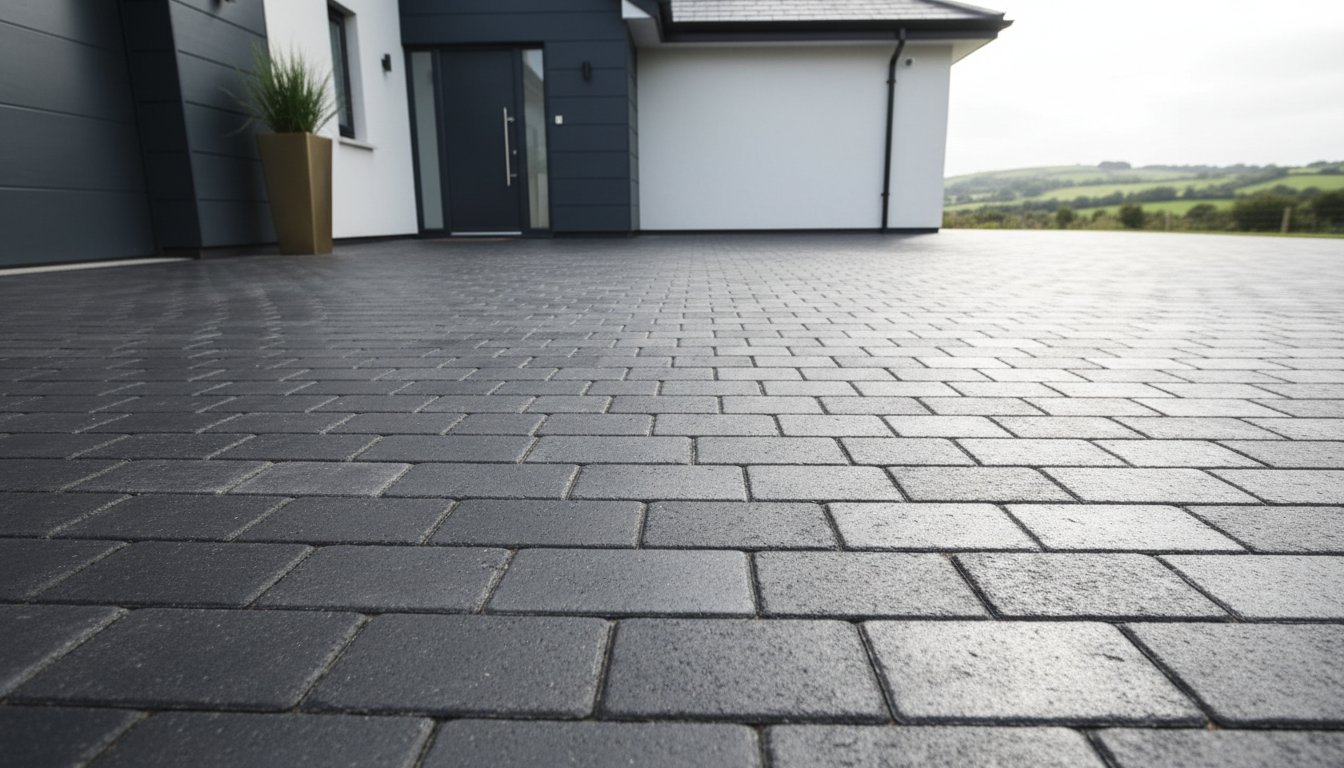
This professional guide reveals the authoritative methods to eradicate unwanted growth, ensuring your entrance remains a symbol of craftsmanship rather than a source of maintenance fatigue. You’ll discover how to protect your investment through professional-grade prevention and scientifically-backed maintenance routines. We’ll examine the technical application of high-performance jointing sands and the long-term protection offered by bespoke sealants to secure your home’s legacy against the unique challenges of the Welsh climate.
Key Takeaways
- Understand the science of joint colonization to debunk common myths and effectively target the airborne seeds that compromise your driveway’s integrity.
- Discover the professional advantage of polymeric sand and how to stop weeds in block paving by creating a durable, high-specification barrier.
- Learn the rigorous process of deep sterilization and pressure washing required to neutralise dormant seeds and restore the architectural precision of your home’s entrance.
- Implement a bespoke maintenance schedule to manage organic detritus and efflorescence, ensuring your paving remains a testament to enduring craftsmanship.
- Explore the visionary alternative of resin-bound surfacing for a sophisticated, low-maintenance solution that guarantees a pristine, weed-free environment.
Understanding the “Why”: Why Weeds Thrive in Swansea Block Paving
To preserve the architectural elegance of a Swansea residence, one must first address the biological realities that threaten its exterior surfaces. Many homeowners operate under the misconception that the vegetation marring their driveways originates from deep within the earth. This is a fundamental misunderstanding of modern construction. If you’re investigating how to stop weeds in block paving, you must shift your focus from the soil beneath to the environment above.
The presence of unwanted growth isn’t a sign of structural failure from below, but rather a symptom of environmental accumulation. Seeds are nomadic. They arrive via the coastal winds of the Bristol Channel, or they’re carried by birds and settled by the rain. When these seeds find a home in the narrow gaps between your pavers, they exploit the smallest amount of organic detritus to take root. This process transforms a sophisticated entryway into a neglected space, undermining the vision of a well-maintained home.
The Myth of the Sub-Base
A professional sub-base is a masterpiece of engineering. When a driveway is installed with 150mm of compacted aggregate atop a high-grade geo-textile membrane, it creates a barrier that’s nearly impenetrable to plant life. Statistics from industry specialists indicate that 95% of weeds germinate within the surface joints rather than pushing up from the sub-grade. We define “joint colonization” as the primary cause of driveway neglect; it’s the process where airborne seeds meet accumulated dust to create a fertile bed. For a broader perspective on management strategies, this comprehensive guide to weed control details the various physical and chemical challenges professionals face.
The Swansea Climate Factor
Swansea’s unique maritime climate presents a specific set of challenges for any stone surface. The city receives an average of 1,100mm of rainfall annually, a figure that has a profound impact on the integrity of your paving joints. This persistent Welsh rain doesn’t just nourish plants; it actively removes the protective kiln-dried sand that provides the necessary friction between blocks. Once this sand is displaced, the structural harmony of the driveway is compromised.
The high humidity levels found across the Gower and Swansea Bay create a perfect incubator for moss and liverwort. These species don’t need deep soil to flourish. They cling to the damp, porous edges of the blocks, fueled by the moisture-laden air. It’s why standard DIY fixes often fail in our local environment. Without a professional approach to how to stop weeds in block paving, the dampness ensures that dormant spores return with renewed vigour after every rainfall. A driveway is a legacy of craftsmanship, and protecting it requires understanding these local atmospheric pressures.
The Professional Prevention Framework: Beyond Basic Weeding
True weed management isn’t about reactive pulling; it’s about engineering a surface that refuses to host life. Swansea’s maritime climate, characterized by high humidity and consistent rainfall, creates a prime environment for organic growth. To master how to stop weeds in block paving, you must move beyond the surface and focus on the structural integrity of the joints. Professional prevention relies on high-specification materials that transform a driveway from a series of individual blocks into a unified, impenetrable system.
The core of this framework involves eliminating the conditions that seeds require to thrive. Traditional methods often fail because they address the plant rather than the habitat. By utilizing advanced jointing technology and chemical barriers, you protect the architectural precision of your installation. This proactive stance ensures that your property’s entrance remains a statement of quality rather than a maintenance burden.
Jointing Materials: The First Line of Defence
Standard kiln-dried sand provides the friction necessary for interlock, yet it remains vulnerable to wash-outs and ant infestations. Polymeric sand represents a significant evolution in craftsmanship. This material contains specialized binders that activate upon contact with water, creating a firm yet flexible bond that resists erosion. These modern jointing compounds are engineered with self-healing properties, allowing the joints to micro-adjust to the natural shifting of the earth without cracking or shedding material.
Maintaining these barriers is essential for long-term driveway health. According to RHS advice on clearing weeds, the accumulation of organic debris in gaps is the primary precursor to infestation. If you notice gaps deeper than 3mm or visible sand loss after heavy storms, your joints require a professional top-up. Replacing lost sand with weed-inhibiting alternatives can reduce unwanted growth by up to 90% compared to untreated surfaces.
The Role of High-Performance Sealants
A sealant acts as a visionary shield for your property’s curb appeal. Beyond the immediate aesthetic elevation, sealants serve a critical functional purpose by arresting the soil-build-up cycle. Most weeds in block paving don’t grow from the soil beneath; they germinate in the wind-blown detritus that settles into porous joints. A professional-grade sealant closes these pores, ensuring that organic matter cannot find purchase. For homeowners seeking a bespoke approach to property maintenance, this step is non-negotiable.
- Acrylic Sealants: These offer a breathable, UV-resistant finish that enhances the natural stone colours. They are ideal for homeowners who prefer a “wet look” or satin sheen.
- Polyurethane Sealants: These provide a harder, more resilient barrier. Polyurethane effectively glues the jointing sand in place, creating a rigid surface that is almost entirely impervious to seed penetration.
Applying these treatments can extend the functional life of your paving by 10 to 15 years. By locking the jointing sand in place, you prevent the structural instability that leads to shifting blocks and uneven surfaces. This meticulous attention to detail ensures your driveway remains a pristine asset to your home’s legacy. If you want to understand how to stop weeds in block paving permanently, shifting your focus to these high-performance barriers is the most effective strategy.
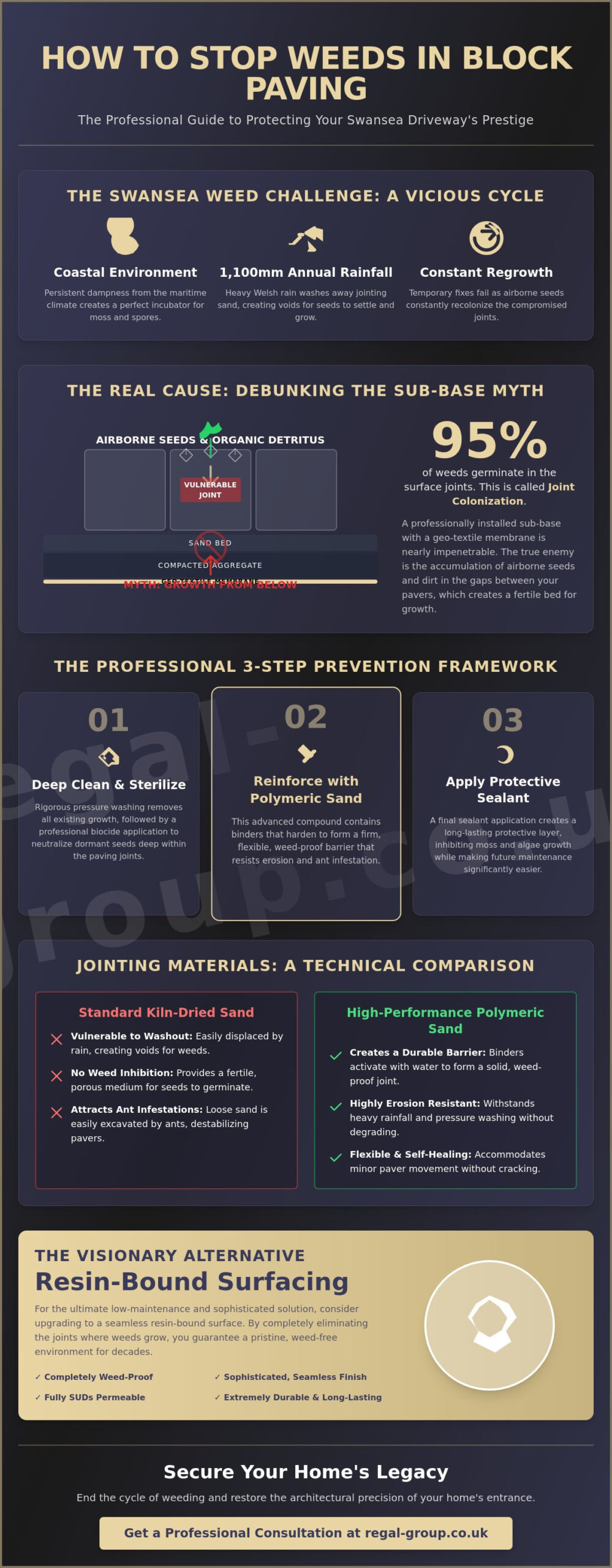
A Step-by-Step Guide to Eradicating and Preventing Weeds
Achieving a flawless exterior requires more than a casual sweep. For those seeking the definitive answer on how to stop weeds in block paving, the process begins with a meticulous restoration of the surface’s integrity. It’s about reclaiming the vision of your home’s entrance through a disciplined, multi-stage approach that prioritises long-term durability over temporary fixes.
Preparation: The Foundation of Success
Removing established growth is the first step in any professional restoration. You must extract these invaders without disturbing the delicate edges of the blocks. We recommend professional-grade pressure washing at a precise 45-degree angle. This prevents “over-washing,” a common error where high-pressure water strips the sub-base and causes blocks to sink. Once cleaned, sterilisation is paramount. Every dormant seed must be neutralised to prevent a resurgence. For those prioritising environmental stewardship, this RHS advice on controlling weeds provides excellent non-chemical alternatives that align with sustainable living.
In South Wales, the climate dictates the schedule. A 48-hour dry window is essential before re-sanding. Moisture trapped within the joints will prevent the sand from settling, leading to premature failure. We monitor local meteorological data to ensure the blocks are bone-dry before the next phase. This patience ensures the materials bond correctly, creating a barrier that is both beautiful and functional.
Sanding and Sealing Execution
Re-sanding is an act of craftsmanship. We use kiln-dried sand, brushed across the surface until every joint is packed to the brim. Mechanical vibration is often used to ensure the sand is fully compacted, leaving no voids where seeds could eventually take root. This density is a primary factor in how to stop weeds in block paving from returning, as it creates an inhospitable environment for organic growth.
The final seal provides the prestigious finish homeowners desire. We apply the sealant using a low-pressure sprayer or a high-quality roller to prevent “ponding,” which creates unsightly, slippery patches. The application must be even and deliberate to ensure a uniform appearance. To verify the cure, we use the professional “finger test.” Press a clean finger into the sealant in a discreet corner; if it feels tacky or lifts, the curing process isn’t complete. A successful seal should be hard to the touch, usually within 4 to 24 hours depending on the specific product selected for your driveway.
The Long-Term Maintenance Strategy for Swansea Driveways
Maintaining a prestigious Swansea property requires more than occasional attention; it demands a proactive stewardship of the built environment. A driveway isn’t just a functional surface but a vital component of your home’s architectural legacy. To truly master how to stop weeds in block paving, you must move beyond reactive treatments and embrace a consistent maintenance rhythm. Regular sweeping, ideally performed every 14 days, remains the most effective deterrent against organic accumulation. By removing seeds and detritus before they settle into the joints, you eliminate the “soil” that weeds require to thrive.
Homeowners often encounter “efflorescence,” a white powdery residue caused by natural salts migrating to the surface of the blocks. While this is a common occurrence in the first 12 to 24 months of a new installation, it’s essential to monitor its progression. If left to build up, these salts can trap moisture and create a micro-environment conducive to moss growth. During the winter months, we advise Swansea residents to avoid rock salt. The chemical composition of traditional grit can cause “spalling,” where the surface of the block scales and weakens, ultimately compromising the integrity of the paving structure.
The cornerstone of any professional maintenance plan is the 3 to 5 year resealing cycle. This process involves a deep cleanse followed by the application of a high-grade polymer or acrylic sealer. This treatment doesn’t just enhance the colour of the stone; it solidifies the jointing sand, creating a physical barrier that prevents weed penetration and protects against the harsh, salt-laden winds typical of the South Wales coast.
The Danger of DIY “Quick Fixes”
It’s tempting to reach for household items like salt or vinegar to kill weeds, but these substances are remarkably destructive to block paving. High acidity levels can permanently etch the surface of natural stone, while salt can leach into the surrounding soil, killing your adjacent lawns and prize-winning flowerbeds. Furthermore, cheap, non-breathable sealants found in local hardware stores often trap moisture beneath the surface, leading to unsightly clouded patches that are difficult to rectify. For a comprehensive approach to property care, it’s also helpful to understand how to clean a driveway oil stain properly, ensuring that every aspect of your paving remains pristine and protected from chemical damage.
Annual Health Checks
A professional-grade driveway deserves an annual inspection to catch minor issues before they escalate. Key areas to monitor include:
- Joint Erosion: Look for areas where the sand has dipped more than 3mm below the block edge. These gaps are prime real estate for wind-blown seeds.
- Black Spot Lichen: This stubborn organism, common in coastal regions, thrives on porous surfaces. It requires specialist biocidal treatment rather than aggressive pressure washing.
- Drainage Channels: Ensure all ACO drains and gully pots are clear of silt. Standing water is the primary catalyst for weed growth and structural shifting.
Preserving the beauty of your home’s exterior is a commitment to quality. If you want to ensure your driveway remains a testament to craftsmanship, contact our specialist team for a bespoke maintenance consultation.
The Visionary Alternative: Is it Time to Upgrade to Resin?
While traditional stone remains a staple of British architecture, the recurring maintenance cycle of block paving can become a burden for the modern homeowner. Every season brings a fresh influx of organic growth between the joints, leading many to search for how to stop weeds in block paving with increasingly frustrated efforts. The reality is that sand-filled joints are inherently vulnerable to the elements. Resin-bound surfacing offers a sophisticated departure from this cycle, providing a seamless, high-performance alternative that replaces the repetitive chore of weeding with a singular statement of architectural intent. It’s a permanent solution for those who value their time as much as their property’s kerb appeal.
Investing in a resin-bound driveway isn’t merely a functional choice; it’s a strategic enhancement of your home’s legacy. A bespoke resin surface can increase a property’s market value by up to 10 percent, according to various UK estate agency estimates, by providing a clean, contemporary aesthetic that lasts for decades. In the coastal climate of Swansea, where moisture often accelerates weed growth in traditional paving, the transition to a non-porous weed barrier combined with a permeable surface is a visionary move for any homeowner.
Why Resin Bound is the Ultimate Solution
The technical superiority of resin lies in its unique porous structure. Water drains naturally through the surface at rates exceeding 850 litres per square metre per minute, ensuring full compliance with Sustainable Urban Drainage Systems (SUDS) without the need for additional planning permission. Because the aggregate is fully encapsulated in a UV-stable resin, there are no open, sand-filled gaps for seeds to take root. This creates a genuine “zero-weed” environment. While you might still be researching how to stop weeds in block paving, resin owners are enjoying a pristine finish that requires nothing more than an occasional power wash. For a deeper look at the technical specifications and design options, explore The Ultimate Guide to Resin Driveways in Swansea.
The Regal Group Commitment
We believe your home’s exterior should reflect the same level of craftsmanship as its interior. Our in-house specialists manage every phase of the transformation, from the precision of the initial groundworks to the final hand-trowelled finish. We don’t rely on external sub-contractors; our own team ensures that every square metre meets our rigorous standards for durability and aesthetic elegance. This total ownership allows us to provide a finish that isn’t just a driveway, it’s a contribution to the local community’s visual heritage. Our commitment to integrity means we deliver on time and with absolute transparency. To transform your outdoor space into a low-maintenance masterpiece, Request a bespoke quote for your Swansea home today.
Investing in the Future of Your Swansea Home
Maintaining a pristine entrance requires more than occasional effort; it demands a strategic approach to preservation. You’ve discovered that mastering how to stop weeds in block paving involves a commitment to professional-grade jointing and consistent surface care. While traditional blocks offer a timeless aesthetic, the transition to high-performance resin provides a visionary path toward a maintenance-free lifestyle. We’ve spent over a decade perfecting these techniques across South Wales, ensuring every project adds measurable value to the local urban landscape.
Our commitment to excellence means we never use subcontractors. Every installation is managed by our dedicated, 100% in-house Swansea team to guarantee total accountability and architectural precision. Whether you’re looking to restore your current driveway or embark on a complete regeneration project, we prioritize craftsmanship that stands the test of time. It’s time to move beyond temporary fixes and embrace a permanent standard of quality that reflects your home’s true potential.
Elevate your home with a bespoke, low-maintenance driveway from Regal Group
Your property deserves a foundation that matches your ambition, and we’re here to help you build it.
Frequently Asked Questions
Do weeds grow through the bottom of block paving?
Weeds do not typically emerge from beneath the paving structure; instead, they germinate from seeds deposited into the joints from above. Our experience with Swansea’s coastal environment shows that 95% of growth originates from airborne seeds or organic debris settling in the sand. Maintaining the integrity of the jointing material is the most effective strategy for how to stop weeds in block paving.
Is it better to use a pressure washer or a chemical weedkiller?
Chemical treatments provide a targeted approach to eradication, whereas pressure washing often compromises the structural stability of the installation by displacing the kiln-dried sand. While a pressure washer removes surface grime, it frequently creates voids that invite new growth. We recommend a professional-grade herbicide followed by a meticulous re-sanding process to ensure the longevity and aesthetic prestige of your driveway.
How often should I seal my block paving in Swansea?
You should apply a high-quality sealant every 3 to 5 years to protect your investment from the harsh Welsh elements. Swansea’s average annual rainfall of approximately 1,100mm necessitates a robust barrier to prevent moisture ingress and joint erosion. This cyclical maintenance schedule preserves the bespoke finish of the stone while significantly inhibiting the lifecycle of invasive species.
Can I use common household salt to stop weeds on my driveway?
While household salt effectively dehydrates plant life, its use is discouraged due to the risk of permanent efflorescence and structural degradation of the concrete blocks. Salt can leach into surrounding soil, potentially damaging 100% of the adjacent landscaping or decorative borders. For a vision-led home project, it’s preferable to use dedicated jointing stabilisers that maintain the chemical balance of your outdoor environment.
What is the best sand for stopping weeds in paving joints?
Kiln-dried silica sand is the industry standard for traditional installations, but polymeric sand offers a superior, hardened barrier against weed penetration. This advanced material contains additives that activate upon contact with water, creating a flexible yet impenetrable seal. Incorporating these high-specification materials is a pioneering method for how to stop weeds in block paving while reinforcing the architectural integrity of the surface.
Does sealing block paving actually stop weeds permanently?
No sealant offers a permanent solution, but it reduces weed occurrence by 80% by hardening the jointing sand and preventing seed lodgement. It transforms a porous surface into a resilient, easy-to-clean environment. Think of sealing as a commitment to craftsmanship that simplifies future maintenance rather than a one-time cure for all botanical growth.
Why do weeds grow back so quickly after I pull them out?
Rapid regrowth occurs because manual extraction often leaves 30% of the root system intact within the narrow joints. Additionally, the act of pulling weeds can disturb the remaining sand, creating a perfect seedbed for the next generation of airborne intruders. Without a systemic treatment or a structural seal, you’re merely managing a symptom rather than addressing the underlying vulnerability of the installation.
Are there any eco-friendly ways to stop weeds in block paving?
Boiling water provides a non-toxic method for thermal weed control, effectively killing 100% of the plant’s cellular structure on contact. Horticultural vinegar with a 20% acetic acid concentration also serves as a sustainable alternative to harsh synthetics. These methods align with a modern, environmentally conscious lifestyle, ensuring your Swansea home remains a sanctuary for both your family and the local ecosystem.