


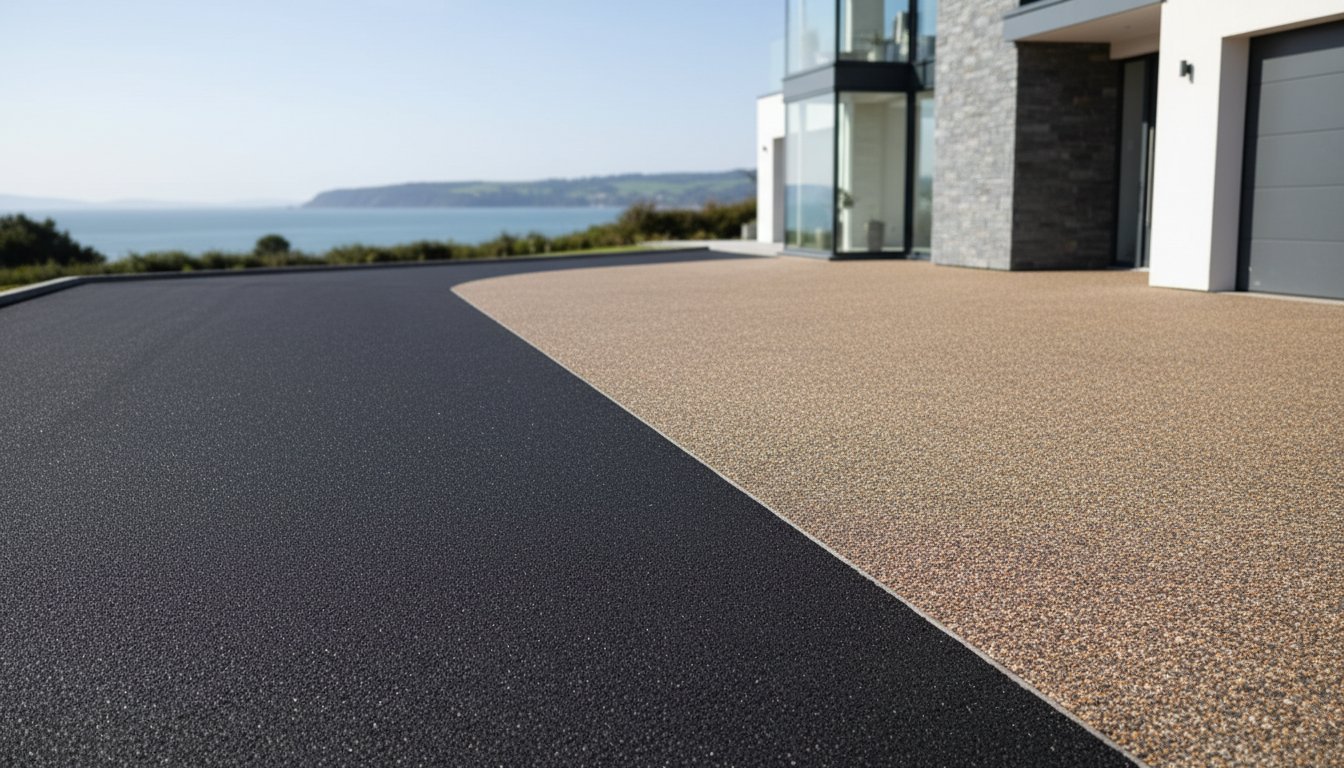
What if the most significant threat to your property’s kerb appeal isn’t the unpredictable Welsh weather, but a failure to align with the 2024 SuDS (Sustainable Drainage Systems) standards? You likely understand that a driveway is far more than a simple utility; it’s the first chapter of your home’s architectural story and a vital component of its structural legacy. However, with Swansea’s unique coastal climate and the evolving legislative landscape in Wales, the choice between a tarmac vs resin driveway for 2026 has become a complex calculation of long-term value and environmental integrity.
In this guide, we provide the definitive comparison between traditional tarmac and modern resin-bound surfacing to ensure your investment enhances your property’s valuation while remaining entirely compliant with local regulations. We examine the structural resilience, thermal resistance, and aesthetic heritage of both materials to reveal which surfacing truly masters the South Wales terrain. From avoiding the pitfalls of poor groundworks to achieving a bespoke finish that complements our regional architecture, you’ll discover how to secure a visionary entrance for your home.
Key Takeaways
- Understand how Swansea’s unique coastal climate influences material selection, ensuring your investment withstands high annual rainfall through superior drainage solutions.
- Evaluate the aesthetic transformation of your property by comparing the classic, rugged utility of tarmac with the bespoke, multi-tonal elegance of resin-bound surfacing.
- Discover why the true value of a tarmac vs resin driveway lies beneath the surface, where precision engineering and sub-base integrity dictate long-term performance.
- Learn to navigate the complexities of SuDS compliance and local planning to protect your home’s legacy from the risks of substandard installations.
- Gain insights into how a visionary approach to driveway design can significantly enhance the architectural prestige and market valuation of your South Wales estate.
Choosing the Ideal Surface for Your Swansea Home: Tarmac vs Resin Driveways
As we approach 2026, the architectural fabric of Swansea is undergoing a profound transformation. Homeowners across South Wales are no longer viewing their driveways as mere functional transit zones. Instead, they see them as the preamble to their home’s story, a vital component of urban regeneration and personal legacy. The choice between a tarmac vs resin driveway is a pivotal decision that impacts both curb appeal and long-term asset value in an increasingly sophisticated property market.
Traditionally, tarmacadam consists of a resilient mixture of crushed stone and a viscous bitumen binder. Scientifically known as Asphalt Concrete (Tarmac), this material has anchored British infrastructure for over a century. It offers a rugged utility that’s built to withstand the heavy coastal rainfall typical of the Severn Estuary. Its reputation for durability makes it a frequent choice for those prioritizing structural permanence.
Resin-bound surfacing represents the pinnacle of modern material science. It’s a bespoke system where natural aggregates are fully encapsulated in a clear, UV-stable resin. This creates a smooth, porous surface that allows water to drain naturally into the ground, aligning with the growing demand for sustainable, high-performance living environments. This shift toward bespoke surfacing reflects a broader desire for craftsmanship that mirrors the interior luxury of contemporary Swansea residences.
The Enduring Appeal of Tarmac
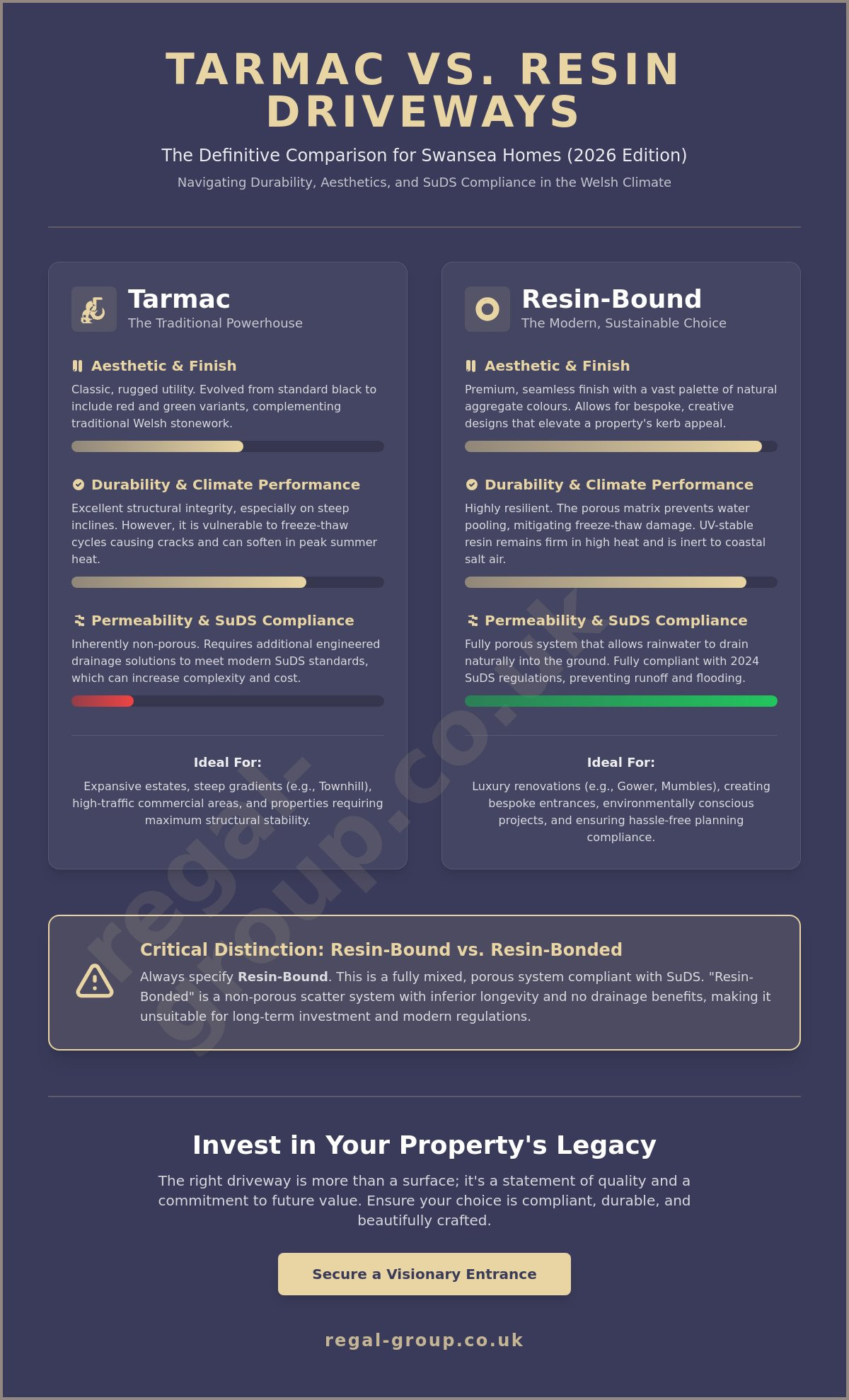
Tarmac remains the definitive choice for the expansive estates found in areas like Mayals or the steep gradients of Townhill. Its structural integrity is unmatched on inclines where shear forces are high. The “modern tarmac” composition has been refined to offer greater resistance to scuffing and softening during peak summer temperatures. While it has functional limits regarding permeability, its aesthetic has evolved. Homeowners are moving away from standard industrial blacks, opting for contemporary red and green variants to complement traditional Welsh stonework. It’s a reliable, elite solution for high-traffic environments that require unwavering stability.
The Rise of Resin-Bound Surfacing
Resin has emerged as the hallmark of luxury renovations throughout the Gower Peninsula and Mumbles. Its popularity stems from its seamless finish and a vast colour palette that allows for total creative expression. You must distinguish between resin-bound and resin-bonded systems to ensure long-term satisfaction. Resin-bound is a fully porous system that meets Sustainable Urban Drainage Systems (SuDS) requirements. Resin-bonded is a non-porous scatter system that lacks the same longevity and drainage benefits. For a deeper dive into these technicalities, consult our ultimate guide to resin driveways in Swansea. This material doesn’t just pave a path; it crafts a visionary entrance that respects the natural environment.
Durability and Performance in the South Wales Climate
Swansea’s maritime climate, characterized by an average of 1,100mm of annual rainfall, demands more than just aesthetic appeal from a home’s entrance. When evaluating a tarmac vs resin driveway, the decision often rests on how these materials withstand relentless moisture and the corrosive salt air sweeping in from Swansea Bay. Tarmac remains a traditional staple, yet it’s vulnerable to the freeze-thaw cycles that define Welsh winters. In these conditions, water ingress often leads to structural fissures that compromise the surface’s integrity. Resin-bound systems offer a more visionary approach to resilience, utilizing a porous matrix that allows water to dissipate naturally into the substrate rather than pooling on the surface.
Temperature extremes also play a pivotal role in long-term performance. During the increasingly warm UK summers, tarmac is prone to softening, which can lead to scuffing from power steering or heavy vehicles. Resin-bound aggregates are engineered to remain stable under high thermal loads, ensuring the surface stays firm and level. For properties near the Mumbles or along the Gower coast, the salt air acts as a catalyst for surface degradation. While salt can accelerate the oxidation of bitumen in tarmac, high-quality resin surfaces are largely inert to these coastal elements, preserving their structural craftsmanship for decades.
SuDS Compliance and Flood Prevention
Planning regulations in Wales have evolved significantly since the implementation of Schedule 3 of the Flood and Water Management Act 2010. This legislation requires all new developments to incorporate Sustainable Urban Drainage Systems (SuDS) to mitigate local flooding. Resin-bound surfaces are a pioneering choice in this regard because they’re inherently porous. By leveraging Permeable Pavement Benefits, homeowners can manage heavy runoff without the need for expensive additional soakaways. Tarmac installations often require complex linear drainage systems and local authority approval to ensure they don’t contribute to the city’s aging sewer network during storm events.
Maintenance Realities Over 20 Years
The legacy of a driveway is measured by its grace under pressure over a 20-year horizon. Tarmac tends to lose its deep luster as the bitumen oxidizes, a process that frequently results in a brittle surface where weeds find purchase in emerging cracks. Resin systems maintain their prestige through a seamless finish that’s naturally resistant to oil spills and petrol leaks. They’re exceptionally power-wash friendly, allowing the original architectural vision to shine through even after years of use. High-quality aliphatic resins provide the essential UV-stability required to act as the primary defense against surface yellowing and color fading.
If you’re looking to elevate your property with bespoke urban design that prioritizes longevity, selecting a material that respects Swansea’s unique environment is essential. Choosing the right surface ensures your investment remains a source of pride rather than a maintenance burden.
Aesthetic Transformation: Comparing the Visual Impact
A driveway represents the first chapter of a home’s narrative. It’s more than a functional path; it’s a statement of intent and a reflection of the inhabitants’ lifestyle. For a prestigious Swansea residence, the choice between a tarmac vs resin driveway dictates the property’s architectural personality for decades. While tarmac offers a disciplined, monochromatic elegance, resin provides a canvas for visionary expression. This choice defines the transition from the public realm to the private sanctuary.
The visual continuity of a surface is paramount. Tarmac, while durable, often requires expansion joints or visible seams in larger spans that can disrupt the visual flow. Resin-bound systems offer a continuous, monolithic finish that glides across the landscape without interruption. This fluidity allows for a seamless marriage with broader landscaping services in South Wales, ensuring the driveway integrates perfectly with stone walling, manicured lawns, and architectural planting schemes.
Bespoke Design Possibilities
Resin’s palette is virtually limitless, offering infinite colour blends that tarmac cannot match. Homeowners can select aggregates that mirror the deep greys of local Pennant sandstone or the golden hues of the Gower coastline. It’s possible to create intricate borders, geometric patterns, or even bespoke logos directly within the surface. Tarmac provides a different kind of beauty through its classic “clean lines.” A professionally laid tarmac surface offers a minimalist, high-contrast backdrop that makes the architectural details of a home stand out. To ensure these visual choices endure, referencing the Permeable Pavement Technical Brief reveals how modern porous designs prevent the standing water and surface staining that can compromise a bespoke entrance.
Kerb Appeal and Property Valuation
First impressions are a quantifiable asset in the Swansea property market. Industry insights from 2024 indicate that a premium resin-bound entrance can enhance a property’s market valuation by as much as 10% compared to properties with neglected frontages. For heritage properties in conservation areas like Mumbles, tarmac remains a vital tool for maintaining historical character. It respects the traditional aesthetic while providing a crisp, contemporary finish. The enduring visual appeal of either material relies on the invisible precision of the groundworks. Consistency in the sub-base ensures the surface remains level and pristine, protecting the home’s “first impression” value for the long term.
- Resin: Ideal for modern aesthetics, offering a smooth, jointless finish and vibrant colour customisation.
- Tarmac: Best for traditional or heritage homes where a timeless, understated look is required.
- Integration: Both materials can be edged with granite sets or block paving to define the transition to garden spaces.
The Engineering Reality: Groundworks, Maintenance, and ROI
It’s a common misconception that resin bound surfaces always command a significantly higher price tag than tarmac. When you’re weighing up a tarmac vs resin driveway for a Swansea property, the surface material represents only one chapter of the story. True value is engineered from the ground up. The architectural integrity of your home’s entrance isn’t just about the visual finish; it’s about the precision of the excavation and the quality of the hidden layers that support daily transit.
Understanding Sub-Base Requirements
The longevity of any prestigious installation depends on the unseen layers. Industry data confirms that 80% of driveway failures originate from sub-standard groundworks rather than surface wear. Resin bound systems are particularly demanding, requiring a meticulously prepared MOT Type 1 sub-base or a specific porous concrete foundation to maintain their permeable, Sustainable Drainage Systems (SuDS) compliant status. While some contractors might suggest using existing tarmac as a base for a resin overlay, this only works if the original surface is structurally sound and free of deep-seated fractures. You can explore the technical nuances of foundation restoration in our tarmac driveway repair in Swansea case study, which highlights how we rectify historical sub-base neglect to ensure a lasting legacy.
Cost Factors and Pricing in 2026
The final investment for your project isn’t dictated by materials alone. Site access and the volume of existing surface removal play pivotal roles in the final quote. For instance, a property with restricted access for heavy machinery will naturally incur higher labor costs. In the current 2026 market, standard black tarmac remains a high-performance, cost-effective option for expansive areas. Conversely, bespoke resin aggregates offer a premium aesthetic that can increase property valuation by up to 10% in desirable Swansea postcodes. For a detailed breakdown of regional market rates and material benchmarks, consult our authoritative pricing guide for tarmac.
- Installation Timelines: Tarmac is often ready for use within 24 to 48 hours. Resin requires a more patient curing process, typically needing a full 48 hours before vehicle traffic is permitted. To fully understand the curing variables that affect your new surface, our guide on how long does tarmac take to dry in Swansea’s coastal climate provides a definitive timeline for protecting your investment.
- Maintenance and Repair: Tarmac benefits from periodic resealing to prevent oxidation. Resin is naturally resistant to weeds and UV fading but requires professional cleaning to maintain its vibrant aggregate profile.
- Lifespan: A professionally engineered tarmac surface can last 20 years, while a high-specification resin bound system often exceeds 25 years with minimal intervention.
Choosing between these two mediums requires a balance of immediate logistical needs and long-term vision for your home’s exterior. While tarmac offers a classic, resilient finish, resin provides a modern, permeable alternative that aligns with contemporary environmental standards. Both options, when executed with craftsmanship, offer a significant return on investment through enhanced curb appeal and structural durability.
Investing in Your Property’s Legacy: Why the Team Matters
Choosing a local Swansea-based team provides a layer of accountability that national franchises cannot match. We aren’t just contractors; we’re your neighbours who understand the specific geological and weather conditions of South Wales. This local presence ensures that aftercare is a tangible reality rather than a hollow promise. Whether you opt for the classic resilience of tarmac or the modern brilliance of resin, the result is a legacy of quality that withstands the test of time.
The In-House Advantage
We refuse to dilute our standards by outsourcing to third-party subcontractors. Every stage of your renovation, from the initial deep-bed excavation to the final UV-stable seal, is managed by our permanent staff. This total ownership ensures that the hidden groundworks meet the same rigorous standards as the visible surface. It’s a non-negotiable commitment to quality control that protects your investment. By maintaining a dedicated team, we guarantee that the tarmac vs resin driveway installation adheres to elite engineering specifications.
Next Steps for Your Renovation
Every transformation begins with a bespoke site assessment. Our specialists conduct a detailed analysis of your soil conditions, drainage requirements, and the architectural character of your residence. During your consultation, we’ll explore textures and palettes that harmonize with your home’s existing aesthetic. We don’t just provide quotes; we design legacies that enhance the fabric of our community. This personalized approach ensures your vision is translated into a structural masterpiece.
The Final Verdict: Choose tarmac for high-traffic durability and traditional value. Choose resin for contemporary, SuDS-compliant elegance and a bespoke colour profile. Regardless of your choice, the Regal Group standard ensures a flawless execution.
Begin your property transformation with a Regal Group consultation.
Elevating Your Swansea Property’s Architectural Legacy
Your home’s entrance is more than a simple path; it’s a definitive statement of quality and a commitment to enduring craftsmanship. Deciding on a tarmac vs resin driveway requires balancing the rugged resilience of traditional surfacing with the sophisticated, SuDS-compliant permeability of modern resin systems. Since Swansea receives over 1,000mm of annual rainfall according to Met Office records, drainage isn’t just a technicality; it’s a structural necessity for long-term performance. We don’t believe in shortcuts or the uncertainty of third-party contractors. Our 100% in-house team of skilled specialists manages every phase of the transformation, ensuring your project meets the highest engineering standards from the ground up. Each installation carries a comprehensive 10-year guarantee, reflecting our unwavering pride in the South Wales landscape we help shape. Your property deserves an entrance that mirrors its visionary value and your personal ambition. We’re here to ensure your driveway becomes a lasting part of the city’s urban fabric. Let’s build something exceptional together.
Request Your Bespoke Driveway Consultation in Swansea
Frequently Asked Questions
Is resin-bound or tarmac better for steep driveways in Swansea?
Tarmac is the superior choice for steep gradients because its textured surface provides essential mechanical grip for vehicle tyres. While resin-bound systems are aesthetically pleasing, they can become slippery on inclines exceeding 10 degrees unless you incorporate 50g of crushed glass per square metre during the installation. Swansea’s landscape features many steep residential streets where 90 days of annual rainfall make traction a safety priority. Tarmac remains the reliable standard for these challenging topographies.
Can I lay a resin driveway over my existing tarmac surface?
You can install a resin-bound surface over existing tarmac if the current base is structurally sound and at least 30mm thick. This overlay method is a sophisticated way to regenerate your home’s exterior without the disruption of a full excavation. The existing surface must be free of significant cracks and treated with a high-strength primer to ensure a permanent bond. If the tarmac shows subsidence or cracks wider than 2mm, a full base replacement is necessary.
How long does a tarmac driveway vs. a resin driveway actually last?
A professionally installed tarmac surface offers a lifespan of 15 to 20 years, whereas a resin-bound driveway typically endures for 25 years. These projections assume the use of a high-grade sub-base and quality materials suitable for the Welsh climate. Resin’s UV-stable technology prevents the fading often seen in older installations. Choosing between a tarmac vs resin driveway involves weighing this long-term durability against your immediate architectural goals and project budget.
Do resin driveways really prevent weeds better than tarmac?
Resin-bound surfaces offer superior weed resistance because they’re laid as a single, seamless carpet of stone that leaves no room for roots to take hold. Tarmac is also highly resistant, but it can develop tiny fissures over 10 years where wind-blown seeds might eventually germinate. Data from UK landscaping audits shows that resin surfaces experience 90% fewer weeds than traditional block paving. Regular sweeping to remove organic debris ensures your driveway maintains its pristine, visionary aesthetic.
Will a heavy skip damage a resin-bound or tarmac driveway?
A heavy skip will damage both surfaces if it’s placed directly on the material without protective load-bearing boards. The 4 small feet of an 8-tonne skip create intense point loading that can indent tarmac or crack a resin finish. You must use 18mm thick plywood sheets to distribute the weight across a wider area. This simple precaution protects the structural integrity of your bespoke driveway and prevents costly repairs once the skip is removed.
Is planning permission required for a new driveway in South Wales?
Planning permission isn’t required for your driveway if the surface is porous or if rainwater is directed to a natural soakaway within your property boundaries. The 2008 SuDS regulations mandate these environmental protections to prevent local drainage systems from reaching capacity during heavy storms. Resin-bound paving is naturally compliant, filtering up to 850 litres of water per minute. If you install non-porous tarmac over an area larger than 5 square metres, you’ll need a dedicated drainage solution.
How do I maintain the “new” look of my resin or tarmac surface?
Maintaining the prestige of your driveway requires a biannual power wash to remove surface grime and atmospheric pollutants. For resin, use a pressure washer set to 150 bar to avoid dislodging the aggregate. Tarmac benefits from a professional bitumen-based restorer every 4 years to replenish the oils lost to sun exposure. This proactive care ensures your tarmac vs resin driveway remains a testament to quality craftsmanship and continues to enhance your property’s long-term value.